Wearable HRV Accuracy in 2026: What the Validation Studies Actually Say About Oura, WHOOP, Garmin, and Apple Watch
Science & Research ·

Wearable HRV Accuracy in 2026: What the Validation Studies Actually Say About Oura, WHOOP, Garmin, and Apple Watch

A peer-reviewed look at how accurately consumer wearables measure HRV against ECG. The Dial 2025 results, what concordance correlation coefficients actually mean, and why composite recovery scores are not the same thing.

SensAI Team

14 min read

SensAI

Get a training plan that adapts to your recovery

Download on the App Store

Your wearable says “recovery: 62%.” What does that actually rest on?

Underneath the colored ring on your wrist or finger is a single physiological signal: heart rate variability. HRV is the millisecond-by-millisecond variation between your heartbeats overnight, and it’s the closest non-invasive proxy we have for autonomic nervous system balance — the system that decides whether your body is ready to absorb stress or needs to back off. (For the broader primer on what HRV is as a training signal, start there.)

Strip away the marketing, and every recovery score, readiness rating, and training-load recommendation from a modern wearable is downstream of how well that one signal is measured. Get HRV wrong by 10% and you’ll get told to push when you should rest, or rest when you should push. Multiply that error across a training block, and the wearable becomes worse than no data at all.

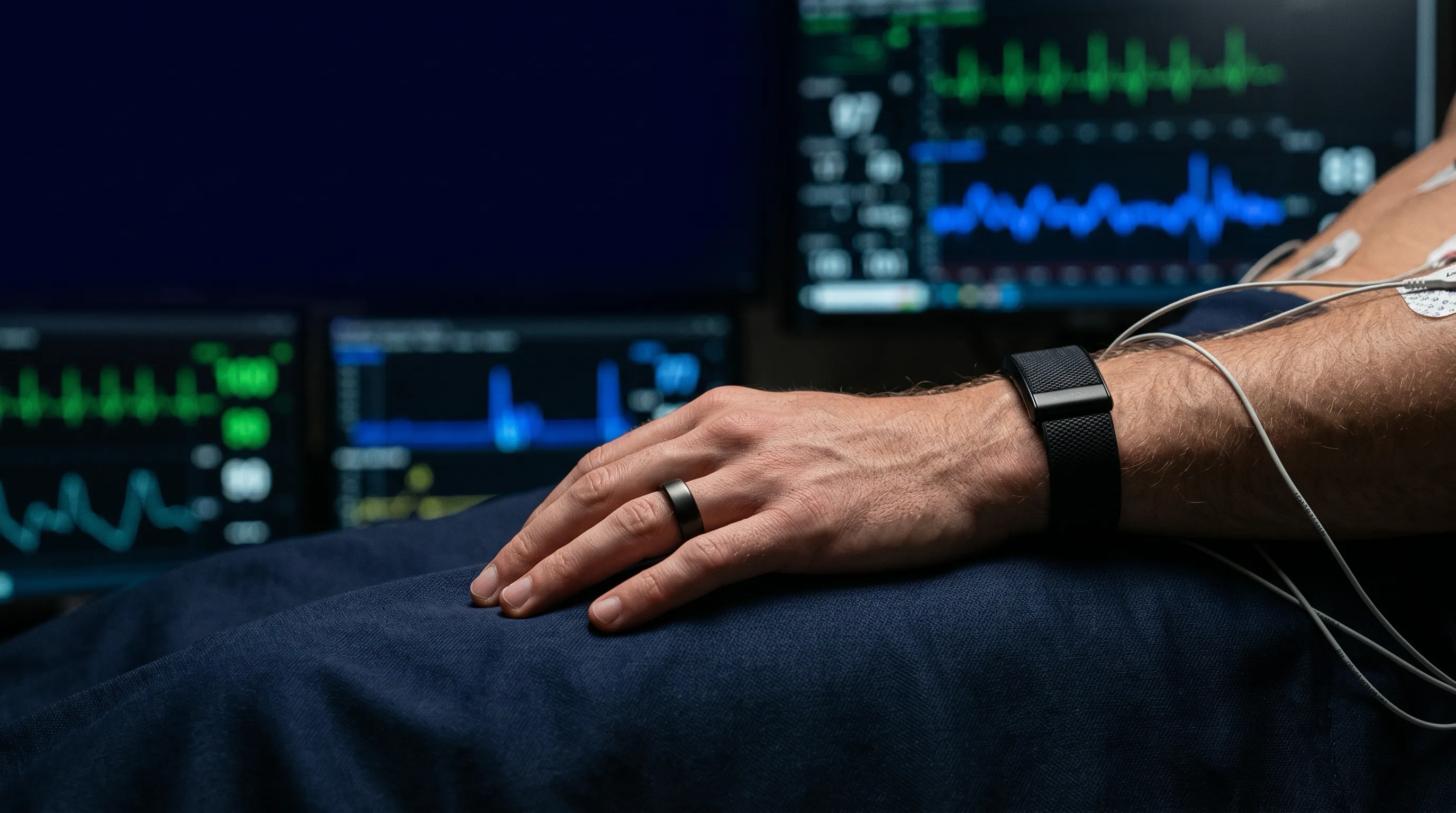
So how good are these devices, really? Not how loud are the claims — but what does the peer-reviewed evidence show when researchers strap a medical-grade ECG to the same person wearing an Oura, a WHOOP, a Garmin, or an Apple Watch and measure them simultaneously for a night?

This article is a tour through the validation literature as it stands in 2026. We’ll cover how accuracy is actually measured (which is more nuanced than “Pearson r”), what the marquee studies found, why the composite recovery scores built on top of HRV are a separate validation problem, and what all of this means for an athlete trying to make a real Tuesday-morning training decision.

How Researchers Actually Measure Wearable HRV Accuracy

Before getting to results, the methodology matters — because the most common metric you’ll see in marketing copy (a Pearson correlation coefficient) is the weakest possible standard.

A Pearson correlation only tells you whether two devices move up and down together. It does not tell you whether they agree on absolute values. A wearable could report HRV that is consistently 30 ms lower than the ECG truth and still produce a near-perfect Pearson correlation. For HRV-guided training, where the rolling 7-day baseline value matters and a 5-10 ms drop is clinically meaningful, that systematic offset is the whole game.

The gold-standard alternative is Lin’s concordance correlation coefficient (CCC), which penalizes both poor linear association and systematic offset from the reference value1. A CCC of 1.0 means perfect agreement with the ECG truth — same direction, same magnitude. A CCC of 0.90 is considered excellent agreement in the validation literature; below 0.80 begins to introduce meaningful score disagreement on hard training days.

Researchers also report mean absolute percentage error (MAPE), which translates accuracy into intuitive units. A MAPE of 5% means that, on average, the wearable misses the true HRV value by 5%. For a baseline HRV of 60 ms, that’s a 3 ms error — usually tolerable. At 15% MAPE, that same baseline is off by 9 ms, which is enough to flip a “go hard” day into a “go easy” day.

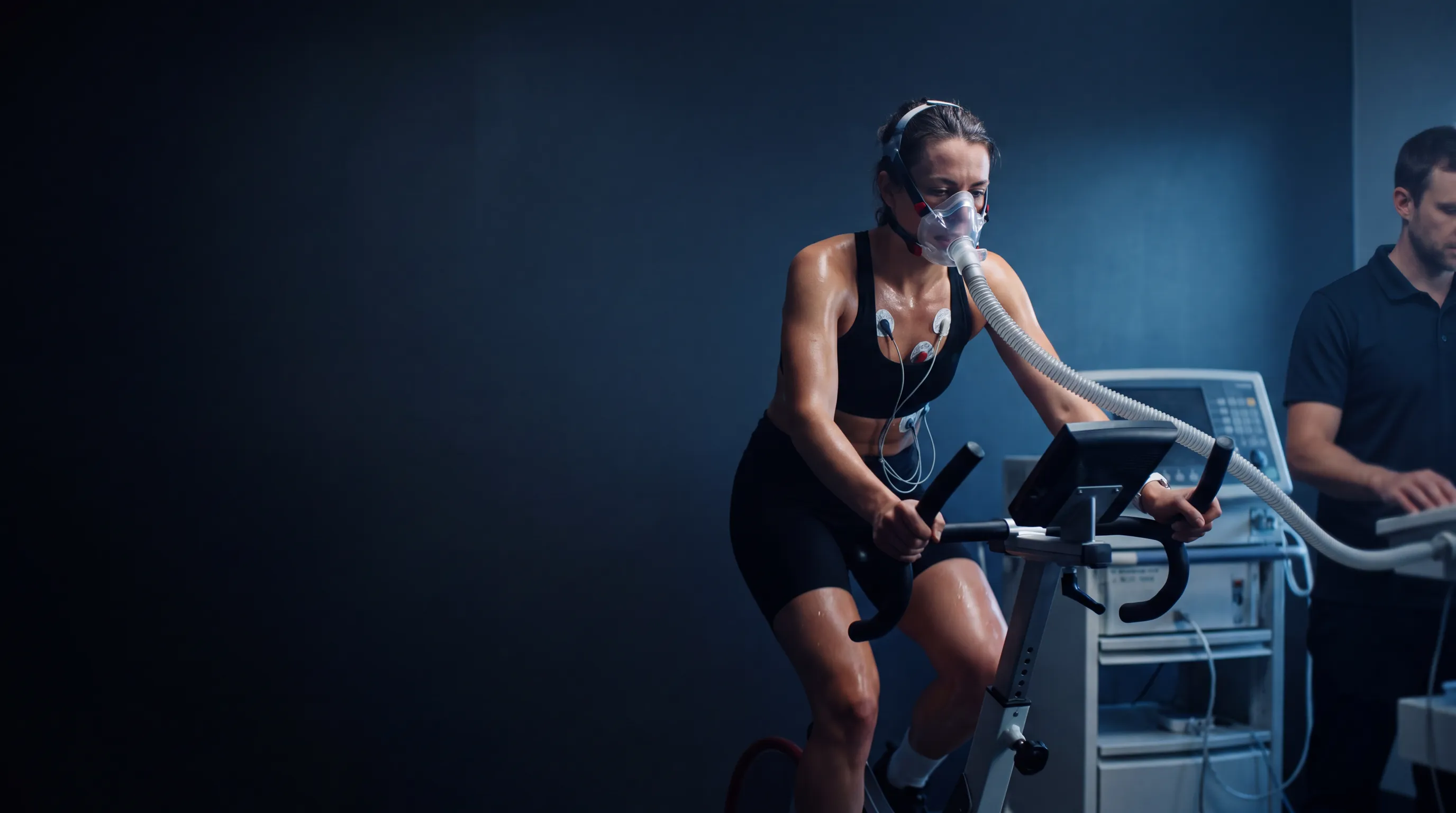
The reference signal itself matters. The cleanest validation studies use a continuous ambulatory ECG strapped to the chest, sampled at 256 Hz or higher, with manually corrected RR intervals. Studies that rely on shorter ECG snippets or pulse-wave photoplethysmography as the reference are weaker by design.

Knowing what to look for in a study is half the battle. With that frame in place, the actual numbers become interpretable rather than just impressive-sounding.

The 2025 Dial Study: The Most Rigorous Head-to-Head Yet

The landmark validation study in 2026 is the work of Michael B. Dial, Ph.D. and colleagues at the Human Performance Collaborative, The Ohio State University. Published in Physiological Reports in August 2025, the study collected 536 nights of simultaneous medical-grade ECG and consumer-wearable data from 13 healthy adults and reported CCC values for nocturnal resting heart rate and HRV2.

For overnight HRV (rMSSD), Dial and colleagues reported:

DeviceCCC (HRV)MAPEInterpretation
Oura Ring (Gen 4)0.99~5%Near-perfect agreement with ECG
WHOOP 4.00.94~8%Excellent agreement
Garmin Fenix 60.87~12%Good but meaningfully behind

The interpretation isn’t “Oura wins, Garmin loses.” It’s more specific than that. A CCC of 0.99 means an Oura-measured rMSSD value can be trusted as a near-direct substitute for an ECG reading — clinically equivalent for nightly trend tracking. A CCC of 0.87 means Garmin’s reading is reliable for spotting large directional shifts (a 30% drop is real), but the wearable will disagree with the truth often enough on individual nights that it’s risky to base a single-day go/no-go decision on it without context.

Apple Watch was not part of Dial et al.’s overnight protocol for a structural reason: Apple Watch does not produce a continuous overnight rMSSD value the way the other three devices do. Apple takes intermittent SDNN-based HRV spot checks during sleep, which is a different measurement philosophy and not directly comparable to the continuous rMSSD that Oura, WHOOP, and Garmin compute3.

That’s not a knock on Apple’s engineering — the ECG app on the Series 6 and later is FDA-cleared and validated for atrial fibrillation detection, which is a genuine clinical achievement. But for the overnight autonomic recovery signal that drives daily training coaching, the Apple Watch is solving a different problem.

What the Earlier Oura Validation Studies Showed (and Why They Still Matter)

The Dial 2025 paper did not appear in a vacuum. Three earlier peer-reviewed Oura validation studies set the stage and remain the best evidence for the long-running accuracy claim.

Kinnunen et al. (2020) ran one of the first rigorous overnight Oura validations against medical-grade ECG and concluded that ring-PPG-derived nocturnal HR and HRV were feasibly accurate enough to track recovery and cardiovascular health in free-living settings4. The study established the methodological template that Cao et al. and Dial et al. would later refine.

Cao et al. (2022) extended this with a 35-participant overnight comparison using a Shimmer3 ECG reference and reported accuracy across both time-domain (rMSSD, SDNN) and frequency-domain (LF/HF) HRV metrics — finding strong agreement in the time-domain measures most relevant to training decisions5. This is the study that most directly supports the Oura recovery algorithm’s reliance on rMSSD-based inputs.

Liang and Chapa-Martell (2024) revisited the Oura Ring in a 2024 paper that focused on the gap between Oura’s heart rate accuracy, which was excellent, and its earlier HRV accuracy, which was more variable across earlier ring generations6. The paper makes an important meta-point: validation results are device-generation-specific. The Gen 4 ring that Dial et al. tested in 2025 is not the same sensor stack as the Gen 2 ring tested in 2020.

When SensAI ingests HRV data through Apple HealthKit or Oura’s API, the platform inherits the accuracy profile of whichever ring generation the user is wearing. Treating “Oura HRV” as a single number across generations would be a methodological mistake — which is why platforms that act on the data, including SensAI’s coaching layer, need to weight signals based on which device produced them and how recent that device’s validation literature is.

WHOOP, Apple Watch, and Garmin: The Smaller but Real Literature

Beyond Oura, the validation evidence is thinner but informative.

For Apple Watch, Hernando et al. (2018) ran one of the first peer-reviewed HRV validations during relaxation and mental stress in healthy adults, finding the device produced usable HRV estimates in controlled conditions7. O’Grady et al. (2024) updated this with the Series 9 and Ultra 2, validating serial resting heart rate and HRV measurements and concluding the device is reliable for daily trend tracking in well-controlled morning protocols8. Bonneval et al. (2025) ran a Series 6 validation against a 3-lead ECG laboratory reference, confirming the broader pattern — Apple’s HRV is reliable when measured under stable conditions, less so when sampled mid-activity9.

For WHOOP, Støve and Hansen (2023) validated the WHOOP Band 3.0 alongside the Apple Watch Series 6 for heart rate accuracy during resistance exercise — a notably hostile measurement environment given the wrist motion involved — and reported that both devices remained acceptable for the use case10. The Dial 2025 study filled the gap on overnight HRV with the CCC = 0.94 figure cited above.

For sleep staging — which feeds into composite recovery scores even if it’s not the HRV signal itself — the systematic review by Schyvens et al. (2024) evaluated the Fitbit Charge 4, Garmin Vivosmart 4, and WHOOP against polysomnography and concluded that consumer devices are improving but still systematically over-estimate total sleep time and under-detect wake bouts in fragmented sleepers11. Robbins et al. (2024) added a three-device comparison (Oura, Fitbit Sense 2, Apple Watch Series 8) and reached a similar conclusion: consumer wearables agree better with polysomnography on healthy sleepers than on sleepers with disrupted architecture12.

The takeaway from the broader literature: device-level HRV accuracy is converging across the major brands, but sleep architecture detection — the other half of most composite recovery scores — is still meaningfully weaker than the marketing implies.

The Crucial Distinction: HRV Measurement vs. Recovery Score Validation

Here’s the part the marketing copy elides.

A wearable’s HRV measurement and its proprietary recovery score are two different things, and they have two different validation literatures. The hardware-level HRV figures discussed above — what Dial, Cao, Hernando, and others have measured — are increasingly trustworthy. The composite recovery scores built on top of them (Oura Readiness, WHOOP Recovery, Garmin Body Battery, Apple Vitals) are largely unvalidated black boxes.

Marco Altini, Ph.D. — co-founder of HRV4Training and one of the most published practitioners in applied HRV monitoring — has consistently made this point in his peer-reviewed work and applied writing13. The hardware is solving the first problem (accurate measurement) faster than the algorithms are solving the second (turning that measurement into a useful daily verdict). A near-perfect CCC against ECG tells you nothing about whether the colored ring on your screen is the right action signal for tomorrow’s training.

The implication for athletes is practical. A high-CCC device gives you a high-quality input. Whether the output of the device’s own scoring algorithm is the right action signal is a separate question — and one that no manufacturer has answered with the level of peer-reviewed rigor that the HRV measurement studies have reached. This is part of why SensAI builds its coaching logic on the underlying HRV trend rather than the manufacturer’s composite score. The proprietary score is one input; the rolling rMSSD baseline is what actually informs training-load decisions.

The point isn’t that recovery scores are useless. They’re a reasonable starting heuristic for an athlete new to HRV. But they’re not validated science, and the smart move is to read the underlying HRV signal yourself — or use a coaching layer that does. For a more granular look at the algorithmic differences between Body Battery, WHOOP Recovery, and Oura Readiness, the companion piece on how each recovery score is actually calculated walks through what goes into the colored circle.

What the HRV-Guided Training Evidence Says About Acting on This Data

Measurement accuracy only matters if the data leads to better training decisions. There’s a separate body of evidence on that.

The most rigorous synthesis is the systematic review and meta-analysis by Andrew A. Flatt, Ph.D. and colleagues, which pooled the controlled trials on HRV-guided training and concluded that endurance athletes who modulated their training intensity based on daily HRV trends produced superior aerobic fitness and performance outcomes compared to athletes following fixed pre-prescribed plans14. The effect sizes were not enormous, but they were real, consistent, and clinically meaningful.

Flatt’s broader research program has shown that the benefit of HRV-guided training comes from a specific mechanism: it lets athletes shift hard sessions away from days when the autonomic nervous system is suppressed and toward days when it’s primed. The improvement isn’t because they train more — it’s because the same volume of training is distributed more intelligently across the week.

This is the practical case for caring about HRV measurement accuracy at all. If you’re going to use HRV to decide whether today is a hard day or an easy day, the signal feeding that decision needs to be trustworthy. A device with a CCC of 0.95 against ECG gives you a defensible foundation. A device with poor concordance does not — even if the colored ring on the screen looks the same.

This is also where AI coaching becomes useful versus replicating the same problem at a higher pixel resolution. A trained athlete can manually inspect rolling 7-day HRV trends, contextualize them against perceived recovery and life stress, and make a training call. Most athletes don’t. SensAI’s role is to do that contextualization automatically — read the validated HRV signal from the user’s connected wearable, weight it against sleep, life stress, and the training plan to date, and surface a specific recommendation rather than a vague color code. The accuracy literature is the foundation; the coaching logic is the layer that translates the signal into action.

What This Means for Picking a Wearable in 2026

The validation literature lets a few practical claims stand:

  • For overnight HRV trend tracking, Oura Ring (Gen 4) and WHOOP 4.0 are currently the strongest validated options, with Dial 2025 CCCs of 0.99 and 0.94 against ECG2.
  • Garmin’s overnight HRV is reliable for large directional shifts but introduces more measurement noise on individual nights, with a CCC of 0.87 in Dial et al.’s data2. This is fine for general training context, less suitable for single-day go/no-go calls.
  • Apple Watch’s HRV is reliable for controlled morning measurements but does not produce a continuous overnight rMSSD comparable to dedicated recovery wearables3 8.
  • All composite recovery scores are downstream of these accuracy profiles and are themselves largely unvalidated13. The smart approach is to read the underlying HRV trend or use a platform that does.

For an athlete deciding which device to actually buy, the validation data is one input — and not necessarily the decisive one. Form factor, battery life, training-feature fit, and 3-year cost all matter alongside accuracy. The companion piece Apple Watch vs Oura Ring vs WHOOP vs Garmin walks through the buying decision across those dimensions; this article covers the science layer that underpins it.

For an athlete who already owns a wearable, the validation data has a simpler implication: trust the HRV trend, treat the proprietary score as a heuristic, and act on the underlying signal. Or let a coaching platform do that translation for you.

The Bottom Line

In 2020, “consumer wearable HRV” was a marketing claim of uncertain scientific footing. In 2026, after a steady accumulation of validation studies culminating in the Dial 2025 paper, it has become a defensible measurement category. The best devices now produce HRV figures within a few percent of medical-grade ECG, which is a remarkable engineering achievement and a real foundation for HRV-guided training.

What hasn’t caught up yet is the validation of the composite recovery scores layered on top of that measurement. That’s where the next decade of research will have to do the work — and it’s also where AI coaching platforms like SensAI can add value today by reading the validated underlying signal and synthesizing the decision the proprietary score is trying (and often failing) to make for you.

Choose a device whose measurement layer the literature supports. Trust the underlying HRV trend more than the colored circle. And when the wearable’s score conflicts with how you feel, the framework for resolving conflicting wearable readiness signals is a more reliable guide than picking the side that matches your mood.


References

  1. Lin LI. A concordance correlation coefficient to evaluate reproducibility. Biometrics. 1989;45(1):255-268.
  2. Dial MB, Hollander ME, Vatne EA, Emerson AM, Edwards NA, Hagen JA. Validation of nocturnal resting heart rate and heart rate variability in consumer wearables. Physiological Reports. 2025;13(16):e70527.
  3. Miller DJ, Sargent C, Roach GD. A Validation of Six Wearable Devices for Estimating Sleep, Heart Rate and Heart Rate Variability in Healthy Adults. Sensors (Basel). 2022;22(16):6317.
  4. Kinnunen H, Rantanen A, Kenttä T, Koskimäki H. Feasible assessment of recovery and cardiovascular health: accuracy of nocturnal HR and HRV assessed via ring PPG in comparison to medical grade ECG. Physiological Measurement. 2020;41(4):04NT01.
  5. Cao R, Azimi I, Sarhaddi F, et al. Accuracy Assessment of Oura Ring Nocturnal Heart Rate and Heart Rate Variability in Comparison With Electrocardiography in Time and Frequency Domains: Comprehensive Analysis. Journal of Medical Internet Research. 2022;24(1):e27487.
  6. Liang Z, Chapa-Martell MA. Deriving Accurate Nocturnal Heart Rate, rMSSD and Frequency HRV from the Oura Ring. Sensors (Basel). 2024;24(23):7475.
  7. Hernando D, Roca S, Sancho J, Alesanco Á, Bailón R. Validation of the Apple Watch for Heart Rate Variability Measurements during Relax and Mental Stress in Healthy Subjects. Sensors (Basel). 2018;18(8):2619.
  8. O’Grady L, et al. The Validity of Apple Watch Series 9 and Ultra 2 for Serial Measurements of Heart Rate Variability and Resting Heart Rate. Sensors (Basel). 2024;24(19):6220.
  9. Bonneval, et al. Validity of Heart Rate Variability Measured with Apple Watch Series 6 Compared to Laboratory Measures. Sensors (Basel). 2025;25(8):2380.
  10. Støve MP, Hansen ECK. Accuracy of the Apple Watch Series 6 and the Whoop Band 3.0 for assessing heart rate during resistance exercises. Journal of Sports Sciences. 2023;40(23):2639-2644.
  11. Schyvens AM, Van Oost NC, Aerts JM, et al. Accuracy of Fitbit Charge 4, Garmin Vivosmart 4, and WHOOP Versus Polysomnography: Systematic Review. JMIR mHealth and uHealth. 2024;12:e52192.
  12. Robbins R, Weaver MD, Sullivan JP, et al. Accuracy of Three Commercial Wearable Devices for Sleep Tracking in Healthy Adults. Sensors (Basel). 2024;24(20):6532.
  13. Carrasco-Poyatos M, González-Quílez A, Altini M, Granero-Gallegos A. Heart rate variability-guided training in professional runners: Effects on performance and vagal modulation. Physiology & Behavior. 2022;244:113654.
  14. Manresa-Rocamora A, Sarabia JM, Javaloyes A, Flatt AA, Moya-Ramón M. Heart Rate Variability-Guided Training for Enhancing Cardiac-Vagal Modulation, Aerobic Fitness, and Endurance Performance: A Methodological Systematic Review with Meta-Analysis. International Journal of Environmental Research and Public Health. 2021;18(19):10299.

Footnotes

  1. Lin LI. A concordance correlation coefficient to evaluate reproducibility. Biometrics. 1989;45(1):255-268. PMID: 2720055. https://pubmed.ncbi.nlm.nih.gov/2720055/

  2. Dial MB, Hollander ME, Vatne EA, Emerson AM, Edwards NA, Hagen JA. Validation of nocturnal resting heart rate and heart rate variability in consumer wearables. Physiological Reports. 2025;13(16):e70527. PMID: 40834291. https://pubmed.ncbi.nlm.nih.gov/40834291/ 2 3

  3. Miller DJ, Sargent C, Roach GD. A Validation of Six Wearable Devices for Estimating Sleep, Heart Rate and Heart Rate Variability in Healthy Adults. Sensors (Basel). 2022;22(16):6317. PMID: 36016077. https://pubmed.ncbi.nlm.nih.gov/36016077/ 2

  4. Kinnunen H, Rantanen A, Kenttä T, Koskimäki H. Feasible assessment of recovery and cardiovascular health: accuracy of nocturnal HR and HRV assessed via ring PPG in comparison to medical grade ECG. Physiological Measurement. 2020;41(4):04NT01. PMID: 32217820. https://pubmed.ncbi.nlm.nih.gov/32217820/

  5. Cao R, Azimi I, Sarhaddi F, Niela-Vilen H, Axelin A, Liljeberg P, Rahmani AM. Accuracy Assessment of Oura Ring Nocturnal Heart Rate and Heart Rate Variability in Comparison With Electrocardiography in Time and Frequency Domains: Comprehensive Analysis. Journal of Medical Internet Research. 2022;24(1):e27487. PMID: 35040799. https://pubmed.ncbi.nlm.nih.gov/35040799/

  6. Liang Z, Chapa-Martell MA. Deriving Accurate Nocturnal Heart Rate, rMSSD and Frequency HRV from the Oura Ring. Sensors (Basel). 2024;24(23):7475. PMID: 39686012. https://pubmed.ncbi.nlm.nih.gov/39686012/

  7. Hernando D, Roca S, Sancho J, Alesanco Á, Bailón R. Validation of the Apple Watch for Heart Rate Variability Measurements during Relax and Mental Stress in Healthy Subjects. Sensors (Basel). 2018;18(8):2619. PMID: 30103376. https://pubmed.ncbi.nlm.nih.gov/30103376/

  8. O’Grady L, et al. The Validity of Apple Watch Series 9 and Ultra 2 for Serial Measurements of Heart Rate Variability and Resting Heart Rate. Sensors (Basel). 2024;24(19):6220. PMID: 39409260. https://pubmed.ncbi.nlm.nih.gov/39409260/ 2

  9. Bonneval, et al. Validity of Heart Rate Variability Measured with Apple Watch Series 6 Compared to Laboratory Measures. Sensors (Basel). 2025;25(8):2380. PMID: 40285070. https://pubmed.ncbi.nlm.nih.gov/40285070/

  10. Støve MP, Hansen ECK. Accuracy of the Apple Watch Series 6 and the Whoop Band 3.0 for assessing heart rate during resistance exercises. Journal of Sports Sciences. 2023;40(23):2639-2644. PMID: 36803578. https://pubmed.ncbi.nlm.nih.gov/36803578/

  11. Schyvens AM, Van Oost NC, Aerts JM, et al. Accuracy of Fitbit Charge 4, Garmin Vivosmart 4, and WHOOP Versus Polysomnography: Systematic Review. JMIR mHealth and uHealth. 2024;12:e52192. PMID: 38557808. https://pubmed.ncbi.nlm.nih.gov/38557808/

  12. Robbins R, Weaver MD, Sullivan JP, et al. Accuracy of Three Commercial Wearable Devices for Sleep Tracking in Healthy Adults. Sensors (Basel). 2024;24(20):6532. PMID: 39460013. https://pubmed.ncbi.nlm.nih.gov/39460013/

  13. Carrasco-Poyatos M, González-Quílez A, Altini M, Granero-Gallegos A. Heart rate variability-guided training in professional runners: Effects on performance and vagal modulation. Physiology & Behavior. 2022;244:113654. PMID: 34813821. https://pubmed.ncbi.nlm.nih.gov/34813821/ 2

  14. Manresa-Rocamora A, Sarabia JM, Javaloyes A, Flatt AA, Moya-Ramón M. Heart Rate Variability-Guided Training for Enhancing Cardiac-Vagal Modulation, Aerobic Fitness, and Endurance Performance: A Methodological Systematic Review with Meta-Analysis. International Journal of Environmental Research and Public Health. 2021;18(19):10299. PMID: 34639599. https://pubmed.ncbi.nlm.nih.gov/34639599/

SensAI

SensAI

Free AI fitness coach

Get Free