AI Workout Generators: How They Work and What to Look For
How AI workout generators build your training plan, the three types available, and why wearable data from your Apple Watch or Garmin changes what personalized programming actually means.

SensAI Team
10 min read
Get a training plan that adapts to your recovery — free on iOS

Every week, millions of people type their fitness goals into a form, click “generate,” and receive a workout plan built by an algorithm they know nothing about. Some of these AI workout generators produce thoughtful, science-backed programming. Others spit out a randomized list of exercises that could have come from a coin flip.
The quality of that generator matters. A well-designed AI tool can save you hundreds of dollars in personal training fees while delivering a program tailored to your body, your schedule, and your equipment. A poorly designed one wastes your time and can steer you toward training that works against your goals. We built SensAI to use wearable data from your Apple Watch, Garmin, or Oura ring, building workout plans that adapt based on your actual recovery status rather than a one-time questionnaire. But regardless of which tool you choose, understanding how these generators work will help you evaluate whether the plan you receive is worth following.
This guide breaks down the technology behind AI workout generators, the different types available, what separates a good one from a mediocre one, and how wearable biometric data is changing what personalized training actually means.
What Is an AI Workout Generator?
An AI workout generator is a software tool that creates exercise programs based on information you provide about your goals, fitness level, available equipment, and training schedule. At its simplest, you answer a handful of questions and the algorithm outputs a workout plan. At its most advanced, the system continuously pulls data from your fitness devices and adjusts your programming day by day.
The key distinction from a static workout template is adaptability. A PDF plan from a fitness magazine gives everyone the same exercises in the same order. An AI generator, at minimum, filters its exercise database and adjusts training variables according to your inputs. How well it filters and adjusts varies enormously across different tools.
These generators sit on a spectrum. On one end, a basic web form asks five questions and returns a fixed plan you follow for weeks. On the other end, an app connected to your wearable tracks your heart rate variability, sleep quality, and training load, then modifies your next session before you even open the app. Most generators fall somewhere between those two poles.
How AI Workout Generators Create Your Plan
Behind the interface, every AI workout generator follows a similar sequence of decisions. The sophistication of each step separates the useful tools from the superficial ones.
-
Input collection. The generator gathers your baseline information: training goals (build muscle, lose fat, improve endurance), experience level, how many days you can train, session length preferences, and what equipment you have access to.
-
Goal analysis. Your primary goal determines the core training parameters. Hypertrophy-focused programs emphasize 8 to 12 reps with moderate rest periods. Strength programs use 3 to 6 reps with longer rest. General fitness blends both approaches. The American College of Sports Medicine publishes evidence-based guidelines that many generators reference for these prescriptions.1
-
Split selection. The algorithm selects a training split using your available training days. Three days typically maps to a full-body program where each muscle group gets trained three times per week. Four days often produces an upper/lower split. Five to six days enables a push/pull/legs rotation. Current research supports training each muscle group at least twice per week for optimal results.2
-
Exercise selection. The algorithm pulls from an exercise database, prioritizing compound movements (squats, deadlifts, presses, rows) and filling in isolation exercises for complete muscle group coverage. Equipment filters ensure you only receive exercises you can actually perform.
-
Volume and intensity prescription. Sets, reps, and relative intensity are calibrated to your experience level. Beginners typically receive lower volume (10 to 12 sets per muscle group per week) to build work capacity. Intermediate lifters get moderate volume (12 to 16 sets). Advanced trainees may receive 16 to 20 or more weekly sets per muscle group.
-
Progressive overload programming. The better generators build in progression mechanics, increasing weight, reps, or volume over time so your body has a reason to adapt. Without progressive overload, even a well-structured program stalls after a few weeks.
Where generators diverge most is what happens after the initial plan. Basic tools stop at step five and hand you a static program. More advanced systems track your logged performance and adjust future sessions based on how you performed. The most sophisticated platforms pull biometric data from your wearable devices to factor in recovery, sleep, and readiness before prescribing each workout.
The exercise database also matters more than most users realize. A generator pulling from a library of 50 exercises will repeat the same movements constantly. One with hundreds of variations can rotate exercises to reduce repetitive strain, target muscles from different angles, and keep training from becoming monotonous.
Types of AI Workout Generators
Not all of these tools use the same approach, and the label “AI” gets applied loosely. Understanding the three main categories helps you evaluate what you are actually getting.
| Type | How It Works | Personalization Level | Best For | Key Limitation |
|---|---|---|---|---|
| Questionnaire generators | Fill out a form (goals, equipment, schedule), receive a static plan | Low: one-time customization based on inputs | Quick plans, beginners who need a starting point | No adaptation. The plan stays the same whether you crush every session or struggle through them. |
| Performance-adaptive apps | Log your workouts in the app. The algorithm adjusts future sessions based on your sets, reps, and weights. | Medium: adapts to your tracked performance | Consistent gym-goers who log every session | Only adapts to data you manually enter. Ignores recovery, sleep, stress, and daily readiness. |
| Wearable-integrated AI coaches | Connects to your fitness devices and uses biometric data (HRV, sleep, resting heart rate, training load) to adjust workouts in real time | High: continuous adaptation based on your body’s actual signals | Anyone who wears a fitness tracker and wants training that responds to their recovery status | Requires consistent device wear. Accuracy depends on the quality of wearable data. |
The science behind AI workout personalization is evolving quickly. Questionnaire generators dominated the early wave of fitness tech, and they still serve a purpose for someone who just wants a basic plan. But the gap between a static plan and an adaptive one becomes obvious within a few weeks. A fixed program cannot account for the night you slept four hours, the week your work stress doubled, or the minor knee strain that makes lunges a bad idea on Thursday.
What to Look for in an AI Workout Generator
With dozens of options available, a few criteria separate the tools worth your time from the ones that waste it.
Start with personalization depth. Some generators ask five generic questions, while others account for your specific injuries, preferences, and training history. The more granular the input, the more tailored the output. Along the same lines, check whether it supports your equipment situation. A useful generator adapts to a full gym, a home setup with dumbbells, or bodyweight only.
-
Progressive overload support. A good generator builds in progression. If the program gives you the same weight, sets, and reps every week with no plan for advancement, it is a template dressed up as AI.
-
Wearable device integration. Tools that connect to your Apple Watch, Garmin, Oura, or Fitbit can factor in recovery metrics you cannot feel. Heart rate variability is one of the most useful signals for gauging whether your body is ready for intensity or needs a lighter session.
-
Goal variety. Some generators only handle strength training. Others support endurance, sport-specific training, or hybrid goals. Choose one that matches what you actually want to accomplish.
Privacy and data handling deserve attention too. Your health data is sensitive. Check whether the tool stores your data securely, whether it shares information with third parties, and what happens to your data if you stop using the service.
The best generators reference established training principles from organizations like the ACSM rather than proprietary “secret algorithms.” Transparency about methodology is a good sign. And a generator that gives you the same plan in month three as it did in week one is not adapting. Look for tools that adjust training variables as you get stronger, learn your preferences from logged feedback, or respond to changes in your schedule and recovery patterns.
One consideration that often gets overlooked: these tools work best as a complement to professional expertise, not a replacement for it. If you have a specific medical condition, are recovering from surgery, or are training for a competitive event with precise performance targets, a human coach who can watch you move and adjust in real time still holds value that software cannot replicate.3
Limitations of AI-Generated Workouts
Honesty about what these tools cannot do is as important as understanding what they can. The technology has real limitations, and recognizing them upfront prevents frustration later.
The most significant gap is form correction. Unless the generator includes computer vision (camera-based movement analysis), it cannot see whether you are performing exercises correctly. A squat programmed at the right weight with the right rep range still causes problems if your knees cave inward on every rep. Proper exercise form remains something that benefits from external feedback, whether from a trainer, a knowledgeable training partner, or video self-review.
Injury awareness depends entirely on what you tell the system. If you fail to mention a shoulder impingement or a history of lower back issues, the generator has no way to avoid exercises that aggravate those conditions. Even when you do flag an injury, the sophistication of exercise substitution varies widely. Some tools simply remove the flagged exercise. Better ones understand which movement patterns to avoid and suggest alternatives that work around the limitation.
Quality varies more than most people expect. The term “AI workout generator” covers everything from a basic randomizer that shuffles exercises into a weekly template to a machine learning system trained on millions of real training sessions. A free web tool that generates a plan in three seconds and a purpose-built training app with years of user data behind it are technically both AI workout generators, but the output quality is not comparable.
Periodization is another blind spot for many generators. A well-designed training program cycles through phases of higher volume, higher intensity, and planned recovery to manage fatigue and drive long-term progress. Most basic generators prescribe the same structure week after week without any planned variation. If your generator does not include deload weeks or phase transitions, you are essentially running a single training block on repeat. That approach works for a few weeks, but it leads to plateaus and increases injury risk as accumulated fatigue compounds without a planned recovery window.
Finally, no generator can account for context it does not have access to. Your motivation on a given day, how your joints feel during a warm-up, whether you are coming off a stressful travel week: these variables matter, and a system that only sees your questionnaire answers or your last logged workout misses them entirely. This is where wearable biometric data starts to close the gap.
How Wearable Data Changes the Game
The biggest limitation of most plan generators is that they create programs based on a snapshot of who you were when you filled out the form. Your body does not stay in the same state from one day to the next. Sleep quality, stress levels, accumulated fatigue, and dozens of other factors shift your readiness for training in ways that a static program cannot accommodate.
Wearable devices solve part of this problem by tracking biometric signals continuously. Heart rate variability measures the balance of your autonomic nervous system. A consistent or rising HRV trend indicates your body has recovered and is ready for intensity. A declining trend over multiple days signals accumulated fatigue, which is exactly when pushing through a hard session does more harm than good. Resting heart rate provides a complementary signal: a rising baseline often confirms what HRV is already suggesting.
When a workout generator has access to these signals, it can make the kind of adjustments that previously required an experienced coach observing you over weeks. On a day when your HRV has been trending down and your sleep data shows poor recovery, the system can scale back intensity, substitute a recovery session, or reduce volume. When your metrics recover, the system pushes intensity back up.
| Approach | What It Knows | What It Misses |
|---|---|---|
| Static questionnaire plan | Your goals, experience, equipment, schedule (at time of creation) | Daily recovery status, sleep quality, stress, fatigue accumulation |
| Performance-logged app | Everything above, plus your workout logs (sets, reps, weight) | Recovery signals, readiness, anything that happens outside the gym |
| Wearable-integrated AI | Everything above, plus HRV, resting heart rate, sleep stages, training load trends | Subjective motivation, acute injuries not reflected in biometrics |
The shift from static to adaptive programming represents the most meaningful advancement in AI fitness technology. A plan that responds to your body’s actual signals, rather than assuming you feel the same every Tuesday, turns a generic tool into something closer to a responsive coaching relationship.
SensAI’s Approach to AI Workout Generation
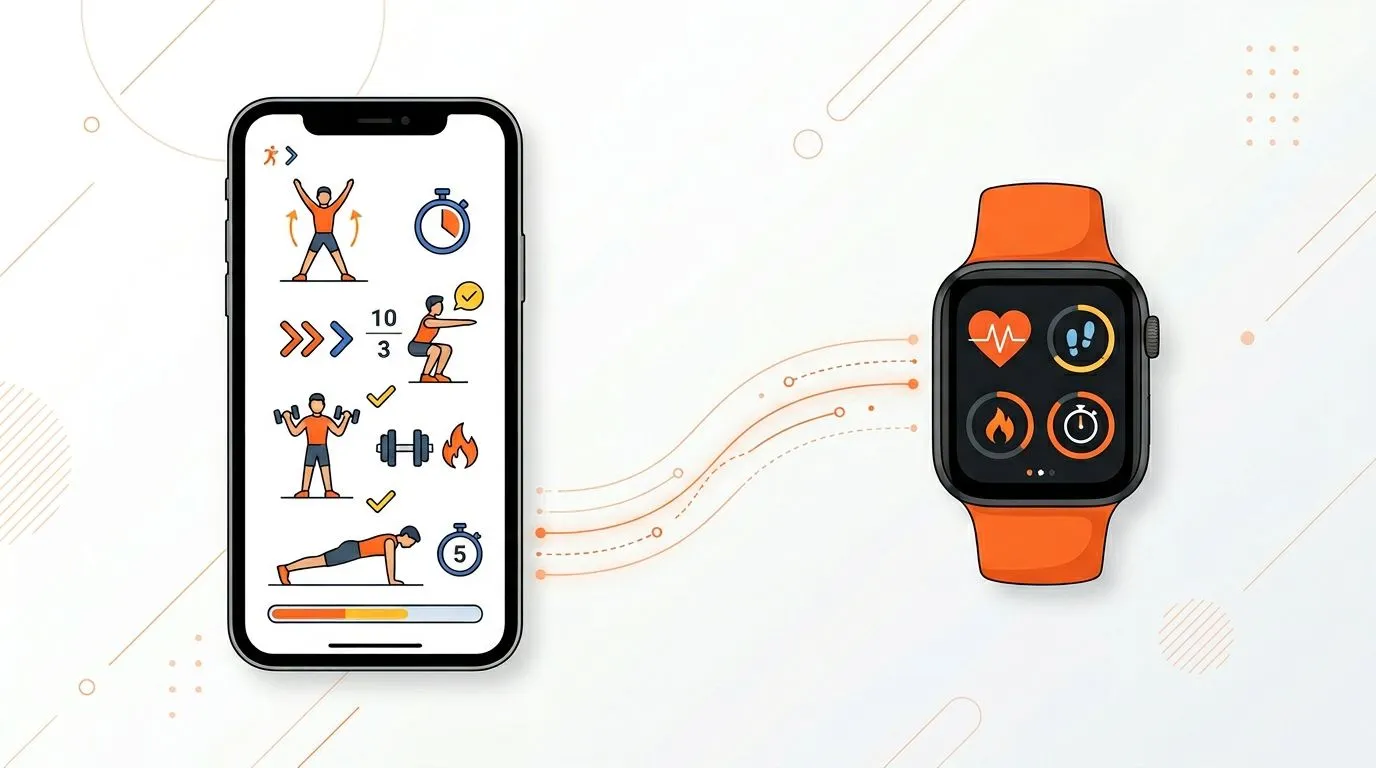
We built SensAI to operate in the third category described above: wearable-integrated AI coaching. The app connects to your Apple Watch or Garmin alongside Oura ring and Fitbit, then reads your HRV, sleep quality, resting HR, and accumulated training load daily.
Rather than generating a plan once and leaving you to follow it, our AI assesses your readiness each day and adjusts your programming accordingly. When your biometric data indicates strong recovery, it prescribes productive training at the appropriate intensity for your goals. When the data shows accumulated fatigue, it scales back automatically, substituting lighter sessions or recovery work before you hit the warning signs of overtraining.
The natural language coaching interface lets you ask questions about your plan, request modifications, or get explanations for why the system made a specific adjustment. Your fitness data becomes a conversation rather than a static dashboard of numbers.
Download SensAI on the App Store to let your biometric data guide your training.
FAQs About AI Workout Generators
Can AI really generate an effective workout plan?
Yes, provided the generator is built on sound training principles. The best AI workout generators follow the same evidence-based programming that qualified coaches use: appropriate volume, progressive overload, balanced muscle group coverage, and adequate recovery. What you get out depends on how good the algorithm is and what data it has access to.
Are AI workout generators safe for beginners?
For general fitness goals, a well-designed generator is a solid starting point. Beginners should start with lower volumes and focus on learning proper form, which most generators cannot assess. If you are new to exercise, pairing an AI-generated plan with a few sessions from a certified trainer to learn foundational movement patterns is a practical approach.
How is an AI workout generator different from ChatGPT?
A general-purpose language model like ChatGPT can produce workout text that reads well but lacks the structured training logic of a purpose-built generator. Dedicated generators use exercise databases, progression algorithms, and (in some cases) biometric data to create plans grounded in training science. ChatGPT may suggest exercises that sound reasonable but lack proper periodization, volume management, or progressive overload. The comparison between AI coaching tools and general chatbots comes down to domain-specific intelligence versus general language ability.
Do I need a fitness tracker to use an AI workout generator?
No. Questionnaire-based generators and performance-logging apps work without a wearable device. However, a fitness tracker unlocks the most advanced personalization tier by giving the system access to recovery metrics like HRV, sleep stages, and resting HR that you cannot accurately self-report.
Can an AI workout generator replace a personal trainer?
For structured programming and daily training guidance, a good AI generator handles the job well. Where human trainers still hold an advantage is form correction, real-time movement assessment, and the nuanced motivation that comes from a personal relationship. The most effective approach for many people is using an AI generator for day-to-day programming while consulting a trainer periodically for form checks and program reviews.
Are free AI workout generators worth using?
Free generators can produce a usable starting plan, especially for beginners who need basic structure. The trade-off is typically less personalization, no ongoing adaptation, and limited exercise variety. If you are serious about training consistently and progressing over months, a tool that tracks your performance and adjusts your programming will deliver better results than a static plan you generated for free.
References
Footnotes
-
American College of Sports Medicine. “ACSM Physical Activity Guidelines.” ACSM, 2025. https://acsm.org/education-resources/trending-topics-resources/physical-activity-guidelines/ ↩
-
Schoenfeld BJ, Ogborn D, Krieger JW. “Effects of Resistance Training Frequency on Measures of Muscle Hypertrophy: A Systematic Review and Meta-Analysis.” Sports Medicine, 2016. https://pubmed.ncbi.nlm.nih.gov/27102172/ ↩
-
Dergaa I, Ben Saad H, El Omri A, Glenn JM, Clark CCT, et al. “Using artificial intelligence for exercise prescription in personalised health promotion: A critical evaluation of OpenAI’s GPT-4 model.” Biology of Sport, 2024. https://pmc.ncbi.nlm.nih.gov/articles/PMC10955739/ ↩