We Built the Personal Trainer That Should Have Always Existed
SensAI combines wearable health data with LLM intelligence to create a fitness coach that actually knows you — adaptive plans and smart coaching.

SensAI Team
6 min read
Get a training plan that adapts to your recovery — free on iOS

Get a training plan that adapts to your recovery — free on iOS
You’ve downloaded the fitness apps. You’ve tried the 12-week programs from Instagram. Maybe you even hired a trainer for a few months before the cost became unsustainable. And yet here you are, still searching for the thing that actually works for your life.
We know the feeling. That’s why we built SensAI.
SensAI is an AI personal trainer that combines aggregated recovery context from HealthKit with large language model intelligence to create coaching that is genuinely personal. Not “pick your goal and we’ll slot you into a template” personal. Personal like a coach that remembers your shoulder constraint, knows the schedule you provided, and can place recent sleep and recovery trends beside your training history.
This is the product we wish existed when we started training. So we built it.
The Problem Nobody Has Solved
The fitness industry has a personalization problem, and it’s worse than most people realize.
Generic training programs take millions of unique humans and sort them into maybe three buckets: beginner, intermediate, advanced. Pick your goal, get your PDF. The program doesn’t know that you slept four hours, that you’re recovering from a cold, or that you haven’t squatted in three weeks because your knee was acting up. It doesn’t care. It’s a spreadsheet with pictures.
Human trainers can provide judgment, hands-on observation, and accountability, but access, schedules, and cost can limit how often many people work with one. A coach also relies on what happens between sessions being reported accurately.
Then there’s the new wave of “AI-powered” fitness apps. Most of them are databases wearing a trench coat. They have a library of pre-built workouts and some if-then logic to swap exercises around. That’s not intelligence. That’s a search filter with good marketing.
The core issue is simple: most static programs do not account for your actual life. Your recovery. Your constraints. The difference between what was planned and what you completed.
What We Built
We started with a question: what if your training program could be regenerated every week using the performance, recovery, schedule, and constraint context you chose to provide?
SensAI combines two things: aggregated health-data context and the reasoning power of large language models. Recovery trends add context to your recent training. The LLM uses that context to explain patterns, build programs, and respond to your requests without claiming to diagnose why a metric changed.
The result is personal in a practical sense: the coach remembers reported preferences, injuries, and constraints, distinguishes planned work from completed work, and lets you stay in control of changes.
How It Actually Works
Your Body Talks. We Listen.
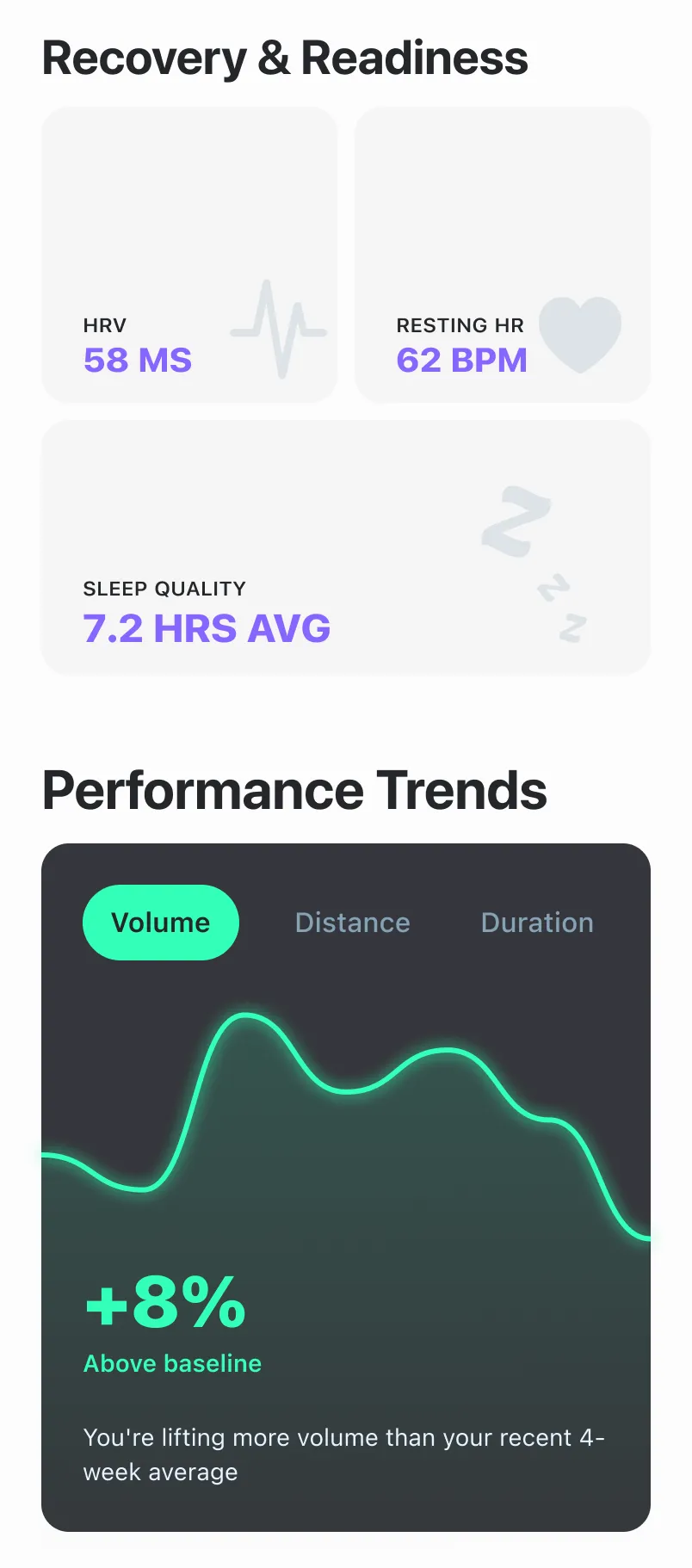
Connect through Apple HealthKit, and SensAI can summarize aggregated heart rate variability, resting heart rate, sleep quality and duration, workout history, and performance trends. These metrics add context to coaching and weekly programming; they are not medical diagnoses or automatic commands.
Had a rough night of sleep? The daily recovery and readiness summary can show how the trend compares with your baseline. You decide whether to keep the session or ask the coach through chat to shorten it, reduce volume, or swap work.
Talk to Your Coach
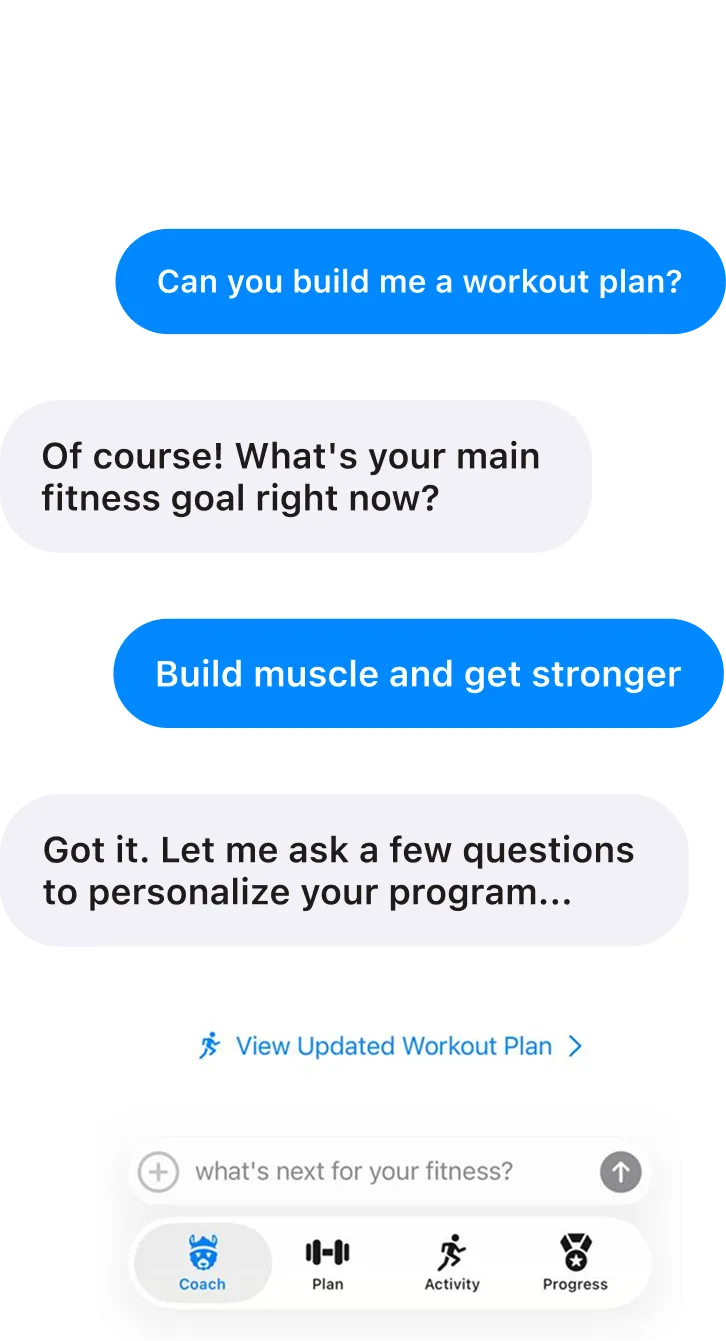
SensAI isn’t a menu you tap through. It’s a conversation. Ask it to modify your workout mid-session. Tell it your shoulder feels off. Send a photo of your form and get feedback. Ask why it programmed Romanian deadlifts instead of conventional pulls this week.
This is what LLMs make possible: a conversational coach that uses the context available to it, remembers reported constraints across sessions, and explains its training suggestions. It does not replace medical or hands-on professional judgment.
Plans Built for You, Not From a Template
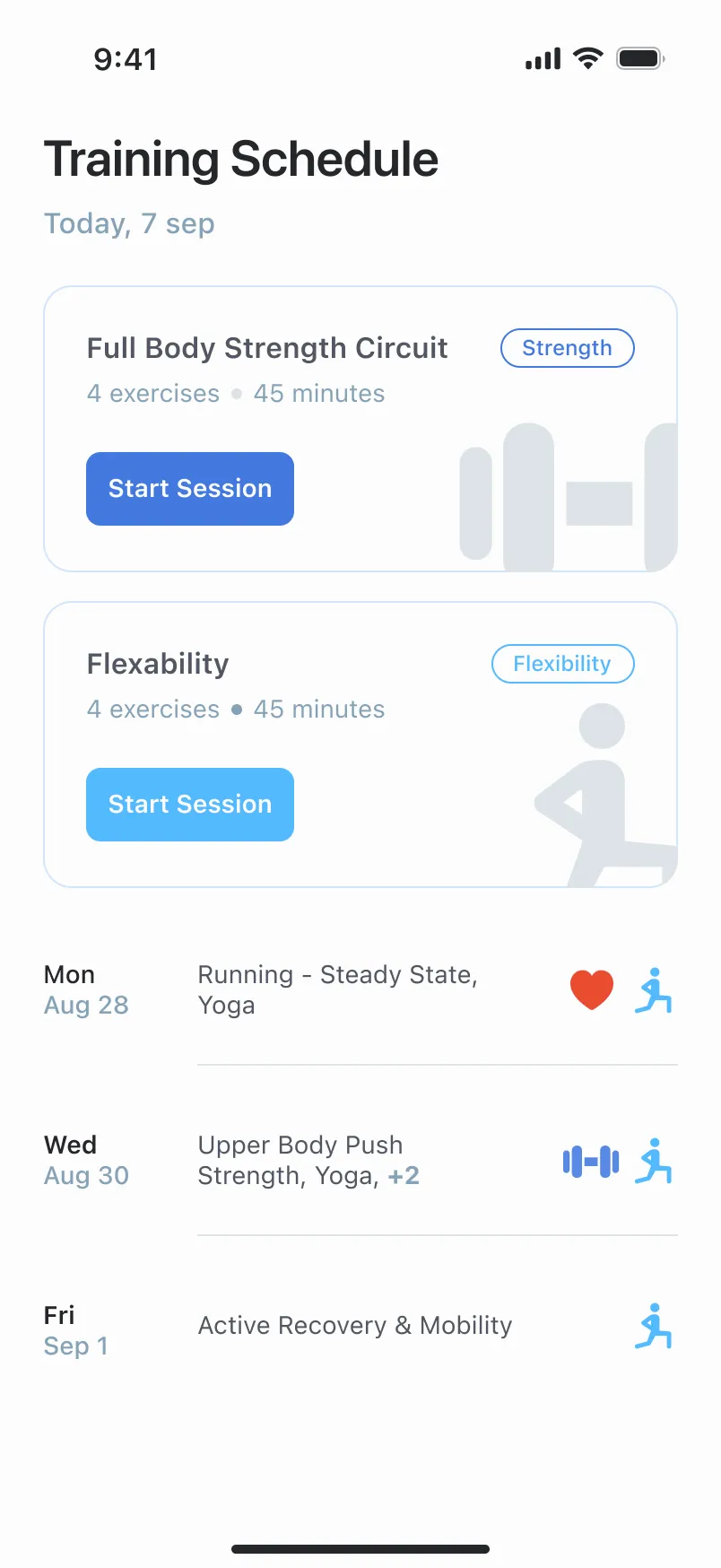
SensAI generates plans from scratch rather than assigning a fixed template. It considers your goals, equipment, schedule, constraints, training history, and available recovery context when building and regenerating your program.
We also separate what was planned from what was performed. Skipped an exercise? Cut a set short? That data matters. SensAI tracks the gap between intention and execution and uses it to make better decisions next week.
Your Program Evolves Weekly
Static programs break down after week two. Life happens. You miss sessions, you get sick, work gets crazy. Most programs don’t care. They just keep marching forward, and you either keep up or feel like you failed.
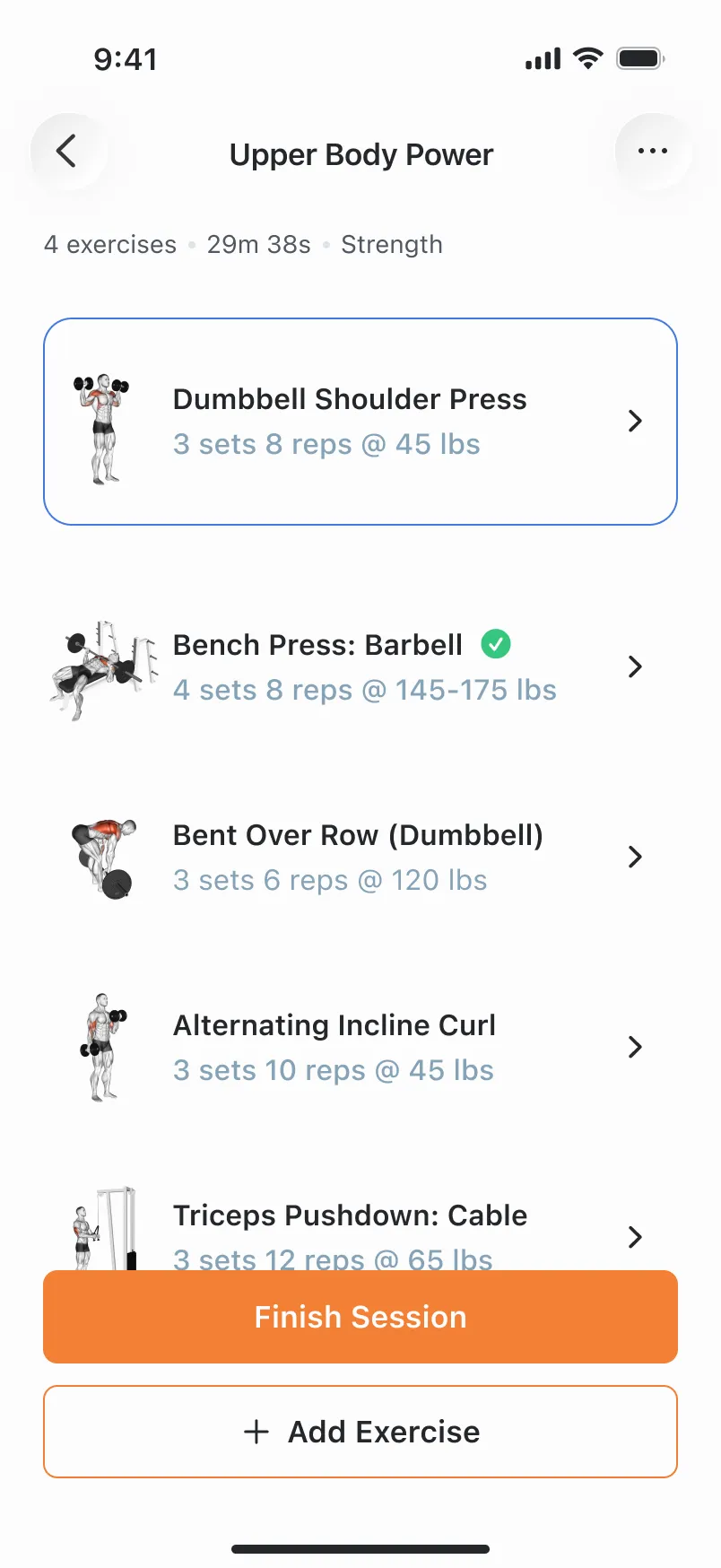
SensAI regenerates your program every week. It uses what you actually completed, performance and recovery trends, and relevant constraints you shared in conversation. Missed sessions can therefore inform the next week instead of being treated as if they were completed.
It Remembers The Context You Share
Tell SensAI about a back constraint, an exercise preference, or the days you can train. Its memory system can retain those reported details across sessions so you do not need to start every conversation from zero.
Memory lets later conversations build on earlier context. You can correct, update, or clarify that context when an injury, preference, schedule, or goal changes.
Smart Guardrails, Not Guesswork
It would be easy to build an AI that just tells you what you want to hear. More volume, heavier weights, train every day. We didn’t do that.
SensAI uses evidence-based volume and recovery guardrails when generating programs. Guardrails reduce avoidable programming errors, but they cannot guarantee safety, diagnose an injury, or replace qualified medical and coaching judgment.
Under the Hood
SensAI is powered by large language models, the same class of technology behind ChatGPT and Claude. It does not use traditional machine-learning algorithms to predict a hidden physiological state. The LLM works with conversational and connected context to generate and explain training suggestions.1
Your privacy matters to us. Raw HealthKit data stays on your device. Aggregated recovery metrics such as HRV trends, sleep quality, and workout summaries are sent server-side for AI coaching. SensAI does not sell your data to third parties.2
SensAI integrates with Apple HealthKit. Apple Watch data is available through HealthKit directly; compatible Garmin, Oura, and WHOOP data can flow through HealthKit into the aggregated recovery context used by the app.3
Who SensAI Is For
SensAI is built for people who take their training seriously but don’t have the time, money, or access for a dedicated human coach.
You might be a busy professional who needs to request a shorter session when meetings eat into gym time. An intermediate lifter who is past the beginner gains and wants weekly programming informed by actual performance. Someone tired of checking an HRV score without knowing how it fits with sleep, recent training, and symptoms.
We’re early. We’ll be honest about that. The current product includes plan generation, weekly regeneration, guided workout tracking, connected recovery summaries, memory, image analysis, and user-requested changes through chat.
Try It
Try SensAI to see whether connected recovery context, weekly programming, and an LLM coach fit the way you train. Current availability and account options are shown in the app.
We’re a small team building something we believe in, and we read every piece of feedback we receive. If you try SensAI and have thoughts, good or bad, we want to hear them.
We built the personal trainer that should have always existed. We think you’ll feel the difference.
References
Footnotes
-
Anthropic. “Claude 3 Model Card.” Anthropic Research, 2024. https://www.anthropic.com/claude ↩
-
Apple. “HealthKit Framework Documentation.” Apple Developer, 2024. https://developer.apple.com/documentation/healthkit ↩
-
Apple. “Apple Watch.” Apple, 2024. https://www.apple.com/apple-watch/ ↩