Workout Apps That Adjust for Fatigue: What Actually Adapts in 2026
Compare recovery guidance, performance-based progression, daily adaptive plans, and user-requested workout changes without treating wearable scores as diagnoses.

SensAI Team
11 min read
Get a training plan that adapts to your recovery — free on iOS

Get a training plan that adapts to your recovery — free on iOS
A Recovery Score Is Not the Same as an Adjusted Workout
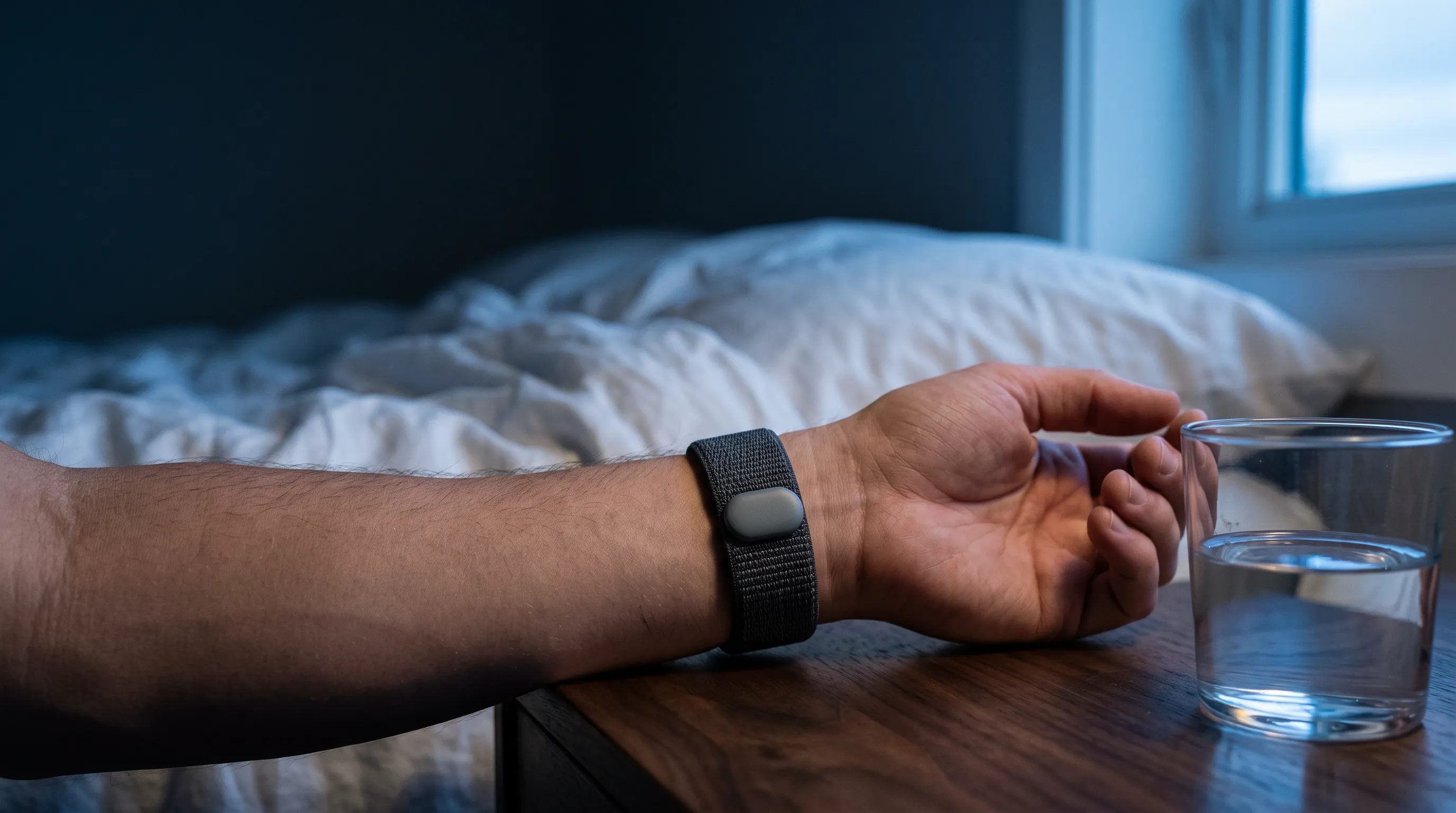
You slept badly, yesterday’s run was harder than expected, and today’s planned lifting session suddenly looks ambitious. Your watch may summarize sleep, resting heart rate, HRV, and recent load. The important question is what the training app does with that context—and whether you remain in control.
Apps use “adaptive” to describe several different behaviors:
- A logger may progress load from completed sets.
- A wearable may recommend a lighter day without writing the session.
- A daily plan may change from performance and recovery metrics.
- A conversational coach may change a workout only after you ask.
- A longer program may regenerate weekly from completed work and recovery trends.
Those are useful but different products. None turns a consumer recovery score into a medical diagnosis or an injury guarantee.
Four Levels of Fatigue-Aware Training
Level 0: Logging
The app records sets, repetitions, load, perceived effort, or personal records. It may make the training history easier to review, but the user decides whether to change the plan.
Level 1: Performance-Based Progression
The app changes load or future recommendations from completed workouts. Fitbod’s muscle-recovery model, for example, estimates local muscle recovery from training history and can account for logged cardio.1 Hevy Trainer generates programs with an algorithm and suggests progressive overload from performance; Hevy explicitly says the feature does not use AI.2
This is adaptation to recorded training, not proof of whole-body readiness.
Level 2: Recovery Guidance
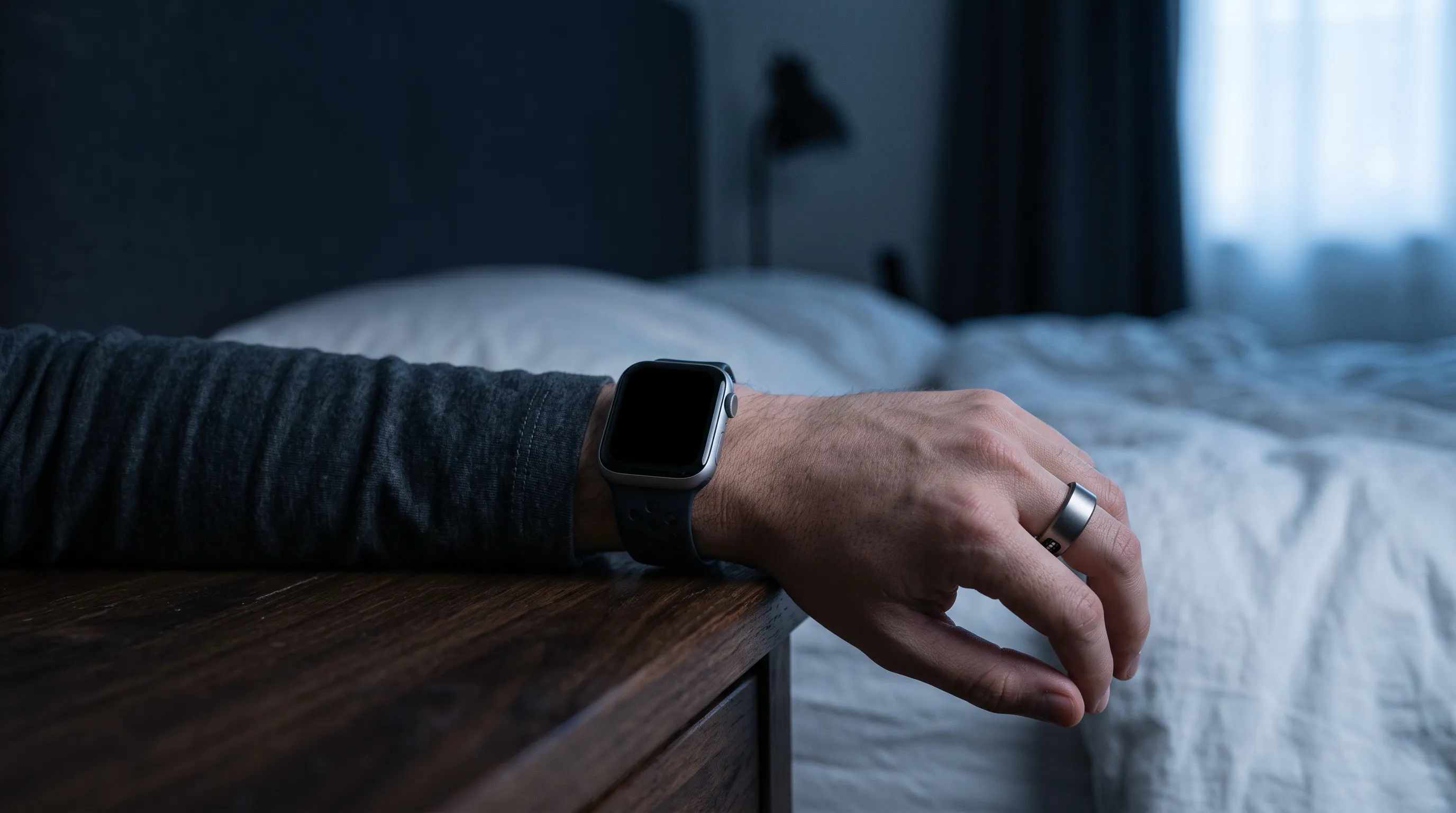
Oura and WHOOP combine signals such as sleep, HRV, resting heart rate, and recent activity into readiness or recovery guidance.34 The output can help a user reflect on the day, but a readiness label or strain target is not the same as a prescribed strength workout.
Level 3: Program or Session Change
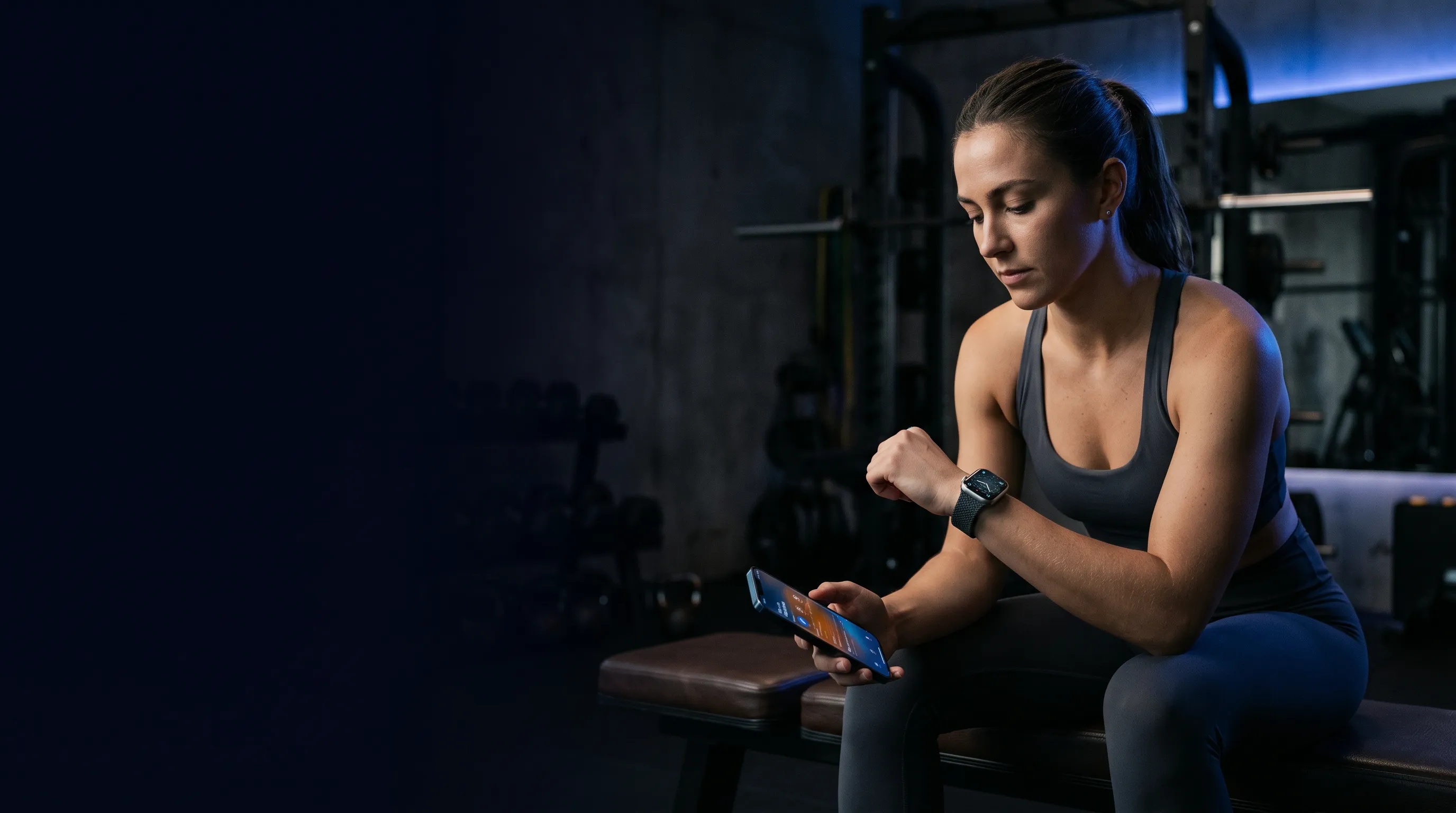
Some products change planned training, but the timing and scope matter. Garmin Fitness Coach can adapt daily from performance, recovery, and health metrics and can include optional strength sessions on compatible devices.5 SensAI uses aggregated recovery and performance trends when it regenerates a program weekly. During a workout, SensAI users can request a shorter session, more volume, or an exercise swap through quick actions or natural-language chat.
SensAI does not silently rewrite the same day’s session from one overnight reading. User-requested mid-workout changes and weekly regeneration should not be described as automatic live mutation.
What the HRV-Guided Research Does—and Does Not Show
HRV-guided training has been studied primarily in endurance athletes and recreational endurance runners. Small cycling and running trials have reported that using HRV to help schedule harder and easier endurance sessions can produce outcomes comparable to or better than predefined schedules in some cohorts.678
A 2021 systematic review found potentially favorable endurance-training outcomes, while also documenting variation in protocols, populations, devices, and analysis methods.9 That literature does not validate an app automatically replacing a strength workout from a consumer watch score.
Subjective information matters too. A systematic review found that self-reported well-being measures often tracked training response more consistently than commonly used objective measures.10 That supports asking how the athlete feels; it does not mean any one questionnaire score should trigger a fixed workout.
Measurement quality is another limit. Plews and colleagues studied the compliance needed for useful HRV assessment.11 Their work supports consistent collection and trend interpretation—not a universal rule such as “10% low for two days means deload.”
App-by-App Snapshot
| App or feature | Main input | What changes | Important limit |
|---|---|---|---|
| Hevy Trainer | Goals, preferences, completed performance | Algorithm-generated program and progressive-overload suggestions | Hevy says it does not use AI; it does not describe overnight HRV/sleep-driven changes.2 |
| Fitbod | Logged strength work and activity | Muscle-recovery estimate and exercise recommendations | Local training-history model, not a medical recovery assessment.1 |
| Oura | Sleep, activity, HRV, resting heart rate, temperature trends | Readiness and activity guidance | Does not by itself write a complete strength program.4 |
| WHOOP | Recovery and strain inputs | Recovery score and strain guidance | A target is not a set-by-set workout.3 |
| Garmin Fitness Coach | Performance, recovery, and health metrics | Daily adaptive fitness workouts; optional strength sessions | Features and plan types depend on compatible devices; Strength Coach and Fitness Coach are distinct offerings.5 |
| SensAI | Goals, constraints, performed training, and aggregated recovery context | Weekly program regeneration; daily recovery summary; user-requested mid-workout changes | No automatic same-day mutation from one wearable reading. |
Product behavior changes. Check the current help page for your specific device, plan, and subscription before buying around one feature.
Signals Worth Discussing, Without Universal Cutoffs
| Signal | Useful question | What it cannot establish alone |
|---|---|---|
| HRV trend | Was it measured consistently, and is the change repeated alongside symptoms or poor sleep? | Illness, overtraining, or a required intensity reduction |
| Sleep estimate | Do duration, quality, and how you feel point in the same direction? | Exact physiologic recovery or injury risk |
| Resting heart rate | Is the change repeated under similar conditions? | A diagnosis; heat, hydration, stress, medication, and illness can contribute |
| Recent workload | Did volume or intensity change abruptly for this person? | A universal “safe” acute-to-chronic workload ratio |
| Mood, soreness, fatigue | Is there a meaningful change from the person’s normal pattern? | The cause or a medical clearance decision |
Avoid fixed consumer rules such as HRV down 10%, resting heart rate up five beats, sleep below six hours, or an acute-to-chronic ratio above one number. Research protocols are not interchangeable, and individual baselines, devices, symptoms, and training history matter.
How SensAI Uses Recovery Context
SensAI’s AI is an LLM, not a traditional machine-learning fatigue classifier. The app generates programs from scratch around goals, equipment, schedule, and constraints. Completed training and aggregated recovery trends inform weekly regeneration and daily readiness summaries.
Apple Watch works directly through HealthKit. Garmin, Oura, and WHOOP can contribute when they write to HealthKit. Raw HealthKit data stays on the device; aggregated recovery metrics and workout summaries may be used server-side for coaching.
During a workout, a user can request a change in plain language or through quick actions. If the request involves pain or injury, the safe first step is to stop the provoking movement. The coach should not diagnose a “tweak” or assume another exercise is safe. Severe pain, deformity, rapid swelling, inability to bear weight, numbness or weakness, chest pain, fainting, or severe shortness of breath requires appropriate urgent assessment. Persistent or worsening pain deserves qualified clinical evaluation.
A Better Three-Question App Test
- What data does it actually use? Separate logged performance, subjective feedback, wearable estimates, and user-entered symptoms.
- When and how does training change? Distinguish a daily recommendation, weekly regeneration, automatic progression, and a change you explicitly request.
- What are the safety boundaries? The app should acknowledge uncertainty, avoid diagnosing injury or illness, and tell users when to stop and seek care.
An app can be valuable even if it only logs well. Choose the level of automation you understand and want rather than assuming the most automatic option is safest.
Fatigue Is Not the Same as Overtraining Syndrome
Overtraining syndrome is multifactorial and diagnosed only after other causes of prolonged performance decline and symptoms are considered.12 One low readiness score, one bad night, or one hard workout does not diagnose it. Repeatedly stacking load without adequate recovery can contribute to problems, but infection, low energy availability, anemia, medication, mental health, life stress, and other medical conditions can produce similar symptoms.
Sleep is an important recovery input, and athlete research links better sleep with several performance and health outcomes.1314 Monitoring reviews also support combining training load with subjective response rather than relying on one metric.15 Consumer wearables can help record context; they cannot determine the cause of persistent fatigue.
If fatigue is severe, unexplained, worsening, or accompanied by chest symptoms, fainting, fever, new weakness, or unusual shortness of breath, stop training and seek medical guidance.
The useful distinction is not “smart app versus dumb app.” It is whether the app clearly states what it observed, what it changed, what it did not infer, and when the user needs human care.
References
Footnotes
-
Fitbod. “Muscle Recovery.” Fitbod Help Center. Accessed 2026. https://fitbod.zendesk.com/hc/en-us/articles/360006269014-Muscle-Recovery ↩ ↩2
-
Hevy. “Hevy Trainer Explained: How It Builds Your Workout Program.” Hevy Help Centre. Accessed 2026. https://help.hevyapp.com/hc/en-us/articles/38385724273047-Hevy-Trainer-Explained-How-It-Builds-Your-Workout-Program ↩ ↩2
-
WHOOP. “Recovery.” WHOOP Developer Documentation. Accessed 2026. https://developer.whoop.com/docs/developing/user-data/recovery/ ↩ ↩2
-
Oura. “Readiness Score.” Oura Help. Accessed 2026. https://support.ouraring.com/hc/en-us/articles/360025589793-Readiness-Score ↩ ↩2
-
Garmin. “Garmin Strength and Fitness Plans.” Garmin Support. Accessed 2026. https://support.garmin.com/en-GB/?faq=pVtmVTZz7C97GZHxtMWgs8 ↩ ↩2
-
Javaloyes A, Sarabia JM, Lamberts RP, Moya-Ramon M. “Training Prescription Guided by Heart-Rate Variability in Cycling.” International Journal of Sports Physiology and Performance, 2019;14(1):23-32. https://pubmed.ncbi.nlm.nih.gov/29809080/ ↩
-
Javaloyes A, Sarabia JM, Lamberts RP, Plews D, Moya-Ramon M. “Training Prescription Guided by Heart Rate Variability Vs. Block Periodization in Well-Trained Cyclists.” Journal of Strength and Conditioning Research, 2020;34(6):1511-1518. https://pubmed.ncbi.nlm.nih.gov/31490431/ ↩
-
Vesterinen V, Nummela A, Heikura I, et al. “Individual Endurance Training Prescription with Heart Rate Variability.” Medicine & Science in Sports & Exercise, 2016;48(7):1347-1354. https://pubmed.ncbi.nlm.nih.gov/26909534/ ↩
-
Düking P, Zinner C, Trabelsi K, et al. “Monitoring and Adapting Endurance Training on the Basis of Heart Rate Variability Monitored by Wearable Technologies: A Systematic Review with Meta-Analysis.” Journal of Science and Medicine in Sport, 2021;24(11):1180-1192. https://pubmed.ncbi.nlm.nih.gov/34489178/ ↩
-
Saw AE, Main LC, Gastin PB. “Monitoring the Athlete Training Response: Subjective Self-Reported Measures Trump Commonly Used Objective Measures: A Systematic Review.” British Journal of Sports Medicine, 2016;50(5):281-291. https://pubmed.ncbi.nlm.nih.gov/26423706/ ↩
-
Plews DJ, Laursen PB, Le Meur Y, et al. “Monitoring Training with Heart Rate Variability: How Much Compliance Is Needed for Valid Assessment?” International Journal of Sports Physiology and Performance, 2014;9(5):783-790. https://pubmed.ncbi.nlm.nih.gov/24334285/ ↩
-
Meeusen R, Duclos M, Foster C, et al. “Prevention, Diagnosis, and Treatment of the Overtraining Syndrome: Joint Consensus Statement of the European College of Sport Science and the American College of Sports Medicine.” Medicine & Science in Sports & Exercise, 2013;45(1):186-205. https://pubmed.ncbi.nlm.nih.gov/23247672/ ↩
-
Watson AM. “Sleep and Athletic Performance.” Current Sports Medicine Reports, 2017;16(6):413-418. https://pubmed.ncbi.nlm.nih.gov/29135639/ ↩
-
Halson SL. “Sleep in Elite Athletes and Nutritional Interventions to Enhance Sleep.” Sports Medicine, 2014;44(Suppl 1):S13-S23. https://pubmed.ncbi.nlm.nih.gov/24791913/ ↩
-
Halson SL. “Monitoring Training Load to Understand Fatigue in Athletes.” Sports Medicine, 2014;44(Suppl 2):S139-S147. https://pubmed.ncbi.nlm.nih.gov/25200666/ ↩