Transform Your Fitness Journey: A Proven Roadmap to Success
Learn how to build a sustainable fitness journey using wearable data, AI coaching, and science-backed strategies for long-term results.

SensAI Team
14 min read
Get a training plan that adapts to your recovery — free on iOS

The gap between owning a fitness tracker and actually getting fitter has never been smaller. Consumer wearables now estimate sleep quality, heart rate variability, recovery status, and daily activity patterns well enough to track useful trends over time. The missing piece was always interpretation: turning those trends into guidance and a program that reflects the difference between your Tuesday and your Saturday.
That’s what LLM-powered coaching can deliver. SensAI creates a daily readiness summary and regenerates your program weekly from actual performance and recovery. When you’re traveling without equipment or need a different exercise, you can ask the coach in chat to modify the workout; it does not recalibrate the plan automatically every day.
This roadmap walks you through building a fitness journey that actually works for your life, using the tools and strategies that current research shows drive real results.
Preparing for Your Fitness Journey
Understanding Your Starting Point
Before designing any program, you need baseline data. If you’re wearing a fitness tracker or smartwatch, you already have weeks or months of metrics showing your actual activity patterns, heart rate variability, sleep quality, and stress levels. This historical data reveals more about your current fitness state than any single assessment could.
Look at your average daily step count over the past month, not just last Tuesday when you were motivated. Check your resting heart rate trend, your typical sleep duration, and how your body responds to stress. These patterns show where you’re actually starting from, not where you wish you were.
Key baseline metrics to review:
| Metric | What to Look For |
|---|---|
| Average daily steps | 30-day trend, not single-day spikes |
| Resting heart rate & HRV | Patterns over time, not daily fluctuations |
| Sleep duration & quality | Consistency and quality scores |
| Activity distribution | Balance of cardio, strength, and rest days |
| Energy & stress levels | Trends showing recovery patterns |
If you’re new to wearables, spend two weeks collecting baseline data before making program decisions. You can’t personalize what you haven’t measured.
Setting Clear Goals
Specific targets drive better results than vague aspirations. “Get healthier” doesn’t give your AI coach or tracking system anything to optimize for. “Increase VO2 max by 10% in 16 weeks” or “complete 3 strength sessions weekly for 12 weeks” provides clear direction.
Research on AI-generated training plans shows that systems perform best when given concrete parameters: current fitness level, available time, equipment access, injury history, and measurable outcomes1. The more precise your input, the more useful the output.
Break larger goals into 4-week blocks. Your first month might focus on consistency (completing scheduled workouts 80% of the time). Month two adds progressive overload. Month three introduces variation. This staged approach prevents the common mistake of trying to change everything simultaneously.
Designing a Personalized Workout Plan
Custom Plans vs. Generic Routines
True personalization goes beyond having your name at the top of a PDF. Your program should account for your recovery capacity, regenerate weekly from what you actually completed, and let you request changes in chat when you’re traveling or report knee pain.
LLM systems that integrate aggregated wearable metrics can provide this context without automatically rewriting today’s plan. When your HRV drops 20% below baseline, signaling incomplete recovery, AI-powered coaching can flag the change in a daily readiness summary and recommend active recovery. You can request a workout change in chat, while the trend also informs the next weekly program regeneration.
Generic programs can’t respond to real-life variation. They assume you’re the same person every workout, with identical recovery and energy levels. Daily readiness guidance and on-demand chat changes add flexibility between weekly program regenerations.
Importance of Flexibility and Adaptation
Your program needs to bend without breaking. Business travel, sick kids, unexpected deadlines: these aren’t excuses, they’re reality. The best plans include substitution options for common scenarios.
When you can’t get to the gym, your program should have equipment-free alternatives that maintain training effect. When you’re feeling unusually fatigued, lower-intensity options keep the habit going without digging a deeper recovery hole. When you only have 20 minutes instead of 45, condensed versions preserve the key movements.
Adaptation also means progression. LLM-based coaching can reason over your training history to identify when you’ve plateaued and may need a stimulus change, whether that’s adding volume, increasing intensity, or introducing new movement patterns2. Those observations can shape the next weekly program; manual programs require you to make these decisions yourself, often resulting in too much change too soon or too little change for too long.
Essential Tools and Technology for Fitness
Wearables and Their Benefits
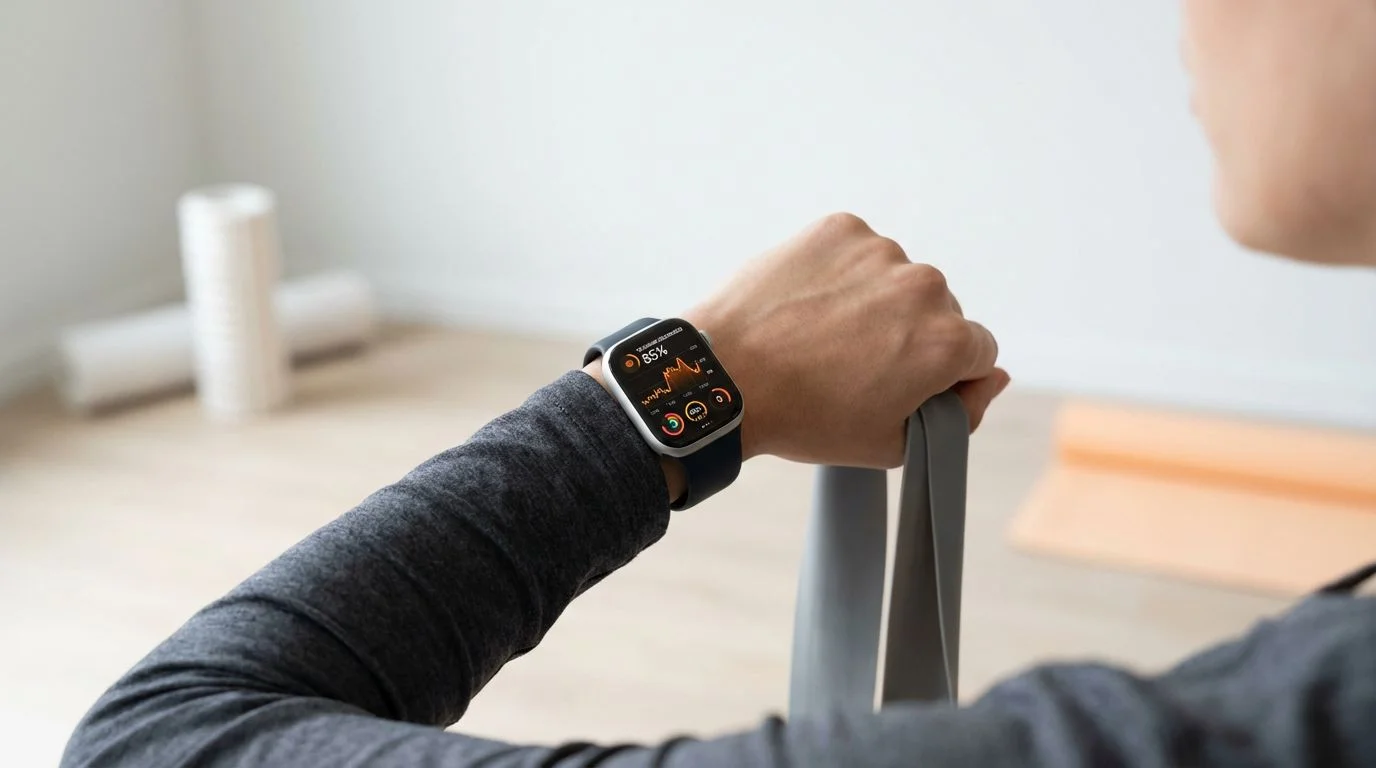
Modern fitness wearables do more than count steps. They measure heart rate variability, sleep architecture, blood oxygen saturation, respiratory rate, and body temperature trends. This data creates a comprehensive picture of your physiological state.
The real value emerges when this data feeds into your training decisions. High HRV and good sleep suggest readiness for intense work. Low HRV, poor sleep, and elevated resting heart rate suggest you need recovery. Understanding how to interpret and use this wearable data transforms it from interesting numbers into actionable intelligence.
Choose wearables based on what metrics matter for your goals:
| Training Focus | Priority Metrics | What to Look For |
|---|---|---|
| Endurance | Heart rate zones, GPS accuracy | Optical HR sensor, multi-band GPS |
| Strength | HRV, recovery scores | Morning readiness metrics, strain tracking |
| Sleep optimization | Sleep stages, respiratory rate | Advanced sleep staging, temperature tracking |
| General fitness | Steps, active minutes, calories | All-day wear comfort, long battery life |
Most major platforms now provide API access, allowing fitness apps to integrate your data into personalized coaching.
Best Apps for Tracking and Guidance
The fitness app landscape has evolved from simple workout loggers to sophisticated coaching platforms. The best apps integrate with wearables and use biometric context to personalize recommendations. Some specialized computer-vision apps also provide live form feedback; SensAI does not.
When evaluating apps, consider which platforms actually use your HRV and recovery data, not just display it. SensAI turns aggregated metrics into a daily readiness summary and uses actual performance and recovery during weekly program regeneration. Be specific about whether another app merely gives guidance or changes a plan automatically.
Key features to prioritize:
-
Wearable integration - Automatic data sync from your device
-
Adaptive programming - Weekly regeneration based on actual performance and recovery
-
Form feedback - Specialized live pose tools, or photo and image analysis in SensAI
-
Progress visualization - Clear trends over weeks and months
-
Recovery guidance - Rest day recommendations based on your data
Research shows that specialized apps using deep-learning pose estimation improved squat form significantly more than control groups (52% increase in correct posture ratio vs. 21% in standard instruction).3 Those live computer-vision tools differ from SensAI, which analyzes photos and images you submit for form feedback rather than tracking every rep or cueing you live.
How to Stay Motivated and Consistent
Daily Habits for Long-term Success
Consistency beats intensity over meaningful timeframes. Showing up for a mediocre workout when you’re tired matters more than crushing it once then disappearing for 10 days. The challenge is building systems that make showing up easier than skipping.
Studies on hybrid human-AI coaching models reveal that users with regular check-ins (even automated ones) maintained higher engagement and logged meals more frequently. Accountability structures work whether they’re digital or human, but they must be present.
Exercise snacking offers another approach to consistency: short movement sessions distributed throughout the day rather than one long workout. Three 10-minute strength circuits can deliver similar adaptations to one 30-minute session, but they’re easier to fit around unpredictable work schedules.
Schedule workouts like meetings. Block the time, protect it, and treat it as non-negotiable. Even if you have to shorten the session, the habit of showing up at that time reinforces the behavior you’re trying to build.
Celebrating Milestones
Progress isn’t linear, but milestones make the non-linear path visible. Set markers at multiple timescales: weekly (completed all planned workouts), monthly (strength PR or pace improvement), quarterly (body composition change or performance benchmark).
Your wearable likely tracks streaks: consecutive days of hitting activity goals or closing movement rings. These serve as low-stakes milestones that maintain motivation between larger achievements. A 30-day workout streak matters psychologically, even if the workouts themselves varied in quality and intensity.
Document baseline measurements and repeat them monthly. Take progress photos from consistent angles in similar lighting. Log how movements feel at specific weights. When motivation dips, this record shows you’ve made tangible progress even when it doesn’t feel dramatic day-to-day.
Tracking Your Progress with Wearables
Using Data for Adjustments
Raw data becomes useful when you know what to do with it. If your average weekly step count drops 30%, that signals you need to add movement. If your strength is increasing but your sleep quality is declining, you might be under-recovering. If your resting heart rate climbs five beats above normal, you could be overtraining or getting sick.
AI coaching platforms excel at pattern recognition across multiple variables. They can identify relationships between your training load, sleep, HRV, and performance that would take you weeks to spot manually. This allows earlier intervention when things drift off track.
Set review checkpoints every four weeks. Compare your current month’s metrics to the previous month’s across all categories: training frequency, intensity distribution, recovery markers, and performance outcomes. Make one or two small adjustments based on what the data reveals, then reassess in another four weeks.
Visualizing Achievements
Graphs turn abstract improvements into concrete evidence. Seeing your 5K pace drop from 11:00 to 9:30 minutes per mile over 12 weeks provides visual proof of adaptation. Watching your HRV trend line climb over time confirms your training is improving your autonomic nervous system function.
Most fitness platforms provide visualization tools, but not all make the important trends obvious. Look for apps that surface meaningful patterns: strength gains relative to your bodyweight, training load balance across intensity zones, and recovery adequacy between hard sessions.
The best visualizations compare you to yourself over time, not to population averages. Your progress relative to your baseline matters more than where you rank against other users. Focus on trend direction and consistency rather than absolute numbers.
Navigating Challenges and Mistakes
Common Pitfalls and How to Avoid Them
The most frequent mistake is doing too much too soon. You’re motivated, the program looks achievable, and you crush week one. Then you’re so sore you can barely walk for week two. Enthusiasm creates consistency; excessive enthusiasm creates injury and burnout.
| Common Pitfall | Warning Signs | Better Approach |
|---|---|---|
| Too much too soon | Extreme soreness, dreading workouts | Increase volume 5-10% weekly, not 50% |
| Ignoring recovery signals | Elevated resting HR, suppressed HRV | Take one strategic rest day to avoid three forced days |
| Panicking at plateaus | Constantly changing programs | Give current program 2-3 more weeks before adjusting |
| Skipping progressions | Injuries, stalled strength gains | Add one set before adding weight; master light loads first |
Progressive overload requires emphasis on “progressive.” Weekly AI-generated programs can manage these progressions with evidence-based volume and recovery guardrails, but you still need to trust the gradual approach when you feel capable of more. One strategic rest day prevents needing three forced rest days later.
Learning from Setbacks
Missed workouts, injury interruptions, motivation crashes: everyone faces setbacks. The difference between people who succeed long-term and those who don’t is how they respond to these disruptions.
When you miss a workout, don’t try to make up for it by doubling the next session. Just continue with your planned program. One missed workout has minimal impact on your fitness; the spiral of trying to compensate and getting overwhelmed has major impact on consistency.
If injury forces time off, focus on what you can do rather than what you can’t. A lower body injury means maintaining upper body work. When you can’t lift, focus on mobility and conditioning. During a complete layoff, prioritize sleep and nutrition so you’re ready when you can train again.
Track not just your successes but your recovery from setbacks. Knowing how long it took to get back to baseline after a two-week break makes future interruptions less scary because you understand your approximate timeline for rebuilding.
Insights for a Successful Fitness Journey
Advice from Experts
Professional strength and conditioning coaches emphasize that timely form feedback can improve both safety and effectiveness. Specialized live pose systems can provide immediate movement cues. SensAI does not track reps or cue you live; it provides form feedback from photos and images you choose to submit.
Researchers studying AI fitness coaching consistently find that hybrid models outperform pure AI approaches. A Stanford study of 65,000 users showed that combining AI coaching with human touchpoints produced 74% more weight loss (5 lbs vs. 3 lbs over three months) compared to AI alone4. The human element provides accountability and handles complex decision-making that algorithms still struggle with.
Expert consensus suggests that personalization matters most for adherence. When programs match your preferences, equipment access, schedule constraints, and goals, you’re far more likely to stick with them. Generic plans might work temporarily if you force your life around them, but personalized plans work because they fit into your existing life.
Member Success Stories
The most successful fitness transformations share common patterns: they started with realistic baseline assessments, set specific measurable goals, used data to guide adjustments, and maintained consistency over months rather than weeks.
Technique feedback can support faster skill acquisition and better movement quality. Specialized pose systems can provide immediate corrections across hundreds of reps; SensAI instead offers asynchronous feedback on photos and images that users choose to share.
Long-term success cases also feature flexible approaches. People who have travel-friendly workout options, equipment substitutions ready, and condensed versions of their main program navigate disruptions without falling off entirely. The program serves them rather than requiring rigid adherence.
Embrace AI for Optimal Fitness Results
How AI Enhances Your Workout
LLM coaching brings three major advantages to fitness programming: reasoning across your personal context, weekly program regeneration based on actual performance and recovery, and on-demand support through chat and submitted images.
Personal-context reasoning means an LLM can consider your training history, goals, recovery trends, preferences, and constraints together. SensAI combines that context with LLM intelligence rather than using traditional machine-learning algorithms.
SensAI uses aggregated wearable metrics and completed workout performance to regenerate your program weekly. A daily readiness summary helps you interpret recovery, and the coach can change a workout when you request it in chat. It does not modify today’s session automatically or in real time.
Specialized computer-vision and pose-estimation tools can watch every rep and provide live movement cues. AI fitness coaching platforms are not all built that way: SensAI does not provide live rep tracking or cues, but it can analyze photos and images you submit for form feedback.
Early adopters of these technologies gain years of compounding benefits from better programming, safer execution, and faster progression. The combination of HealthKit context, weekly adaptive programming, daily readiness guidance, and on-demand chat or image feedback creates a more personalized coaching experience.
FAQs About a Fitness Journey
How long does it take to see results from a fitness program?
Initial adaptations appear within 2-4 weeks: improved movement quality, better work capacity, more consistent energy. Visible physical changes typically emerge around 8-12 weeks with consistent training and nutrition. Performance improvements like strength gains or pace improvements often show measurable progress at the 4-6 week mark.
Do I need expensive equipment to start a fitness journey?
No. Bodyweight training, resistance bands, and minimal equipment deliver significant results, especially for beginners. AI coaching apps can design effective programs around whatever you have access to. Equipment expands options but isn’t required for progress.
How often should I work out each week?
Frequency depends on your goals, current fitness level, and recovery capacity. Most research suggests 3-5 sessions weekly provides good results for general fitness. Beginners often do better with 3-4 sessions to allow adequate recovery. Your wearable data can help identify if you’re under or over-training.
What’s the best type of exercise for weight loss?
Resistance training maintains muscle mass during caloric deficits, keeping metabolism higher. Cardiovascular work burns calories and improves heart health. The combination of both, along with nutrition management, produces the best body composition outcomes. Consistency matters more than exercise type.
How do I stay motivated when progress slows down?
Plateaus are normal adaptation phases. Focus on process metrics (completed workouts, sleep quality, nutrition consistency) rather than only outcome metrics (weight, strength). Celebrate small wins. Change variables strategically rather than overhauling everything. Remember that maintaining your current level during a plateau phase is progress compared to declining fitness.
Can AI coaching really replace a human personal trainer?
AI excels at personalization and pattern recognition. Humans excel at complex decision-making, emotional support, and accountability. Research shows hybrid models combining AI programming with human check-ins outperform either approach alone. For most people, AI provides useful daily readiness and conversational guidance, while occasional human interaction enhances adherence and handles nuanced situations.
What metrics should I track from my wearable?
Priority metrics include resting heart rate, HRV, sleep duration and quality, training volume, and intensity distribution. Secondary metrics like steps, calorie burn, and stress scores provide useful context. Focus on trends over weeks rather than daily fluctuations, since day-to-day noise matters less than month-to-month direction.
How do I know if I’m overtraining?
Warning signs include elevated resting heart rate, suppressed HRV, declining performance despite adequate effort, mood changes, sleep disruption, and persistent fatigue. If multiple indicators trend negative for 5-7 days, reduce training volume and prioritize recovery until markers normalize.
References
Footnotes
-
PMC/NCBI. “Comparative study of GPT-4 and LLMs as virtual fitness coaches.” ncbi.nlm.nih.gov, 2024. https://pmc.ncbi.nlm.nih.gov/articles/PMC12261634/ ↩
-
Genessy, Jody and Grok. “Harnessing AI for Fitness and Health.” rm.edu, 2025-07-09. https://rm.edu/blog/ai-for-fitness-and-health/ ↩
-
Interactive Journal of Medical Research. “Deep-learning exercise coaching mobile app study.” i-jmr.org, 2023. https://www.i-jmr.org/2023/1/e37604/ ↩
-
Overfelt, Maggie (Stanford GSB). “AI Can Coach You to Lose Weight. But a Human Touch Still Helps.” gsb.stanford.edu, 2023-06-29. https://www.gsb.stanford.edu/insights/ai-can-coach-you-lose-weight-human-touch-still-helps ↩