How AI and Wearables Are Changing Fitness Apps in 2026
Discover how AI personalization and wearable integration are transforming fitness apps in 2026, from smart workout adaptation to real-time recovery tracking.

SensAI Team
9 min read
Get a training plan that adapts to your recovery — free on iOS

More than 345 million people used fitness apps in 2024, generating over 850 million downloads worldwide1. That number signals a fundamental shift in how people approach training. The smartphone in your pocket now has more power to personalize your workout than any gym membership card ever could.
Mobile exercise apps rank as the fourth biggest fitness trend for 2026, trailing only wearable technology, programs for older adults, and exercise for weight management. The demand reflects a broader truth: generic workout programs fail most people. Your body responds differently than anyone else’s to the same stimulus, and apps that recognize this reality are pulling ahead.
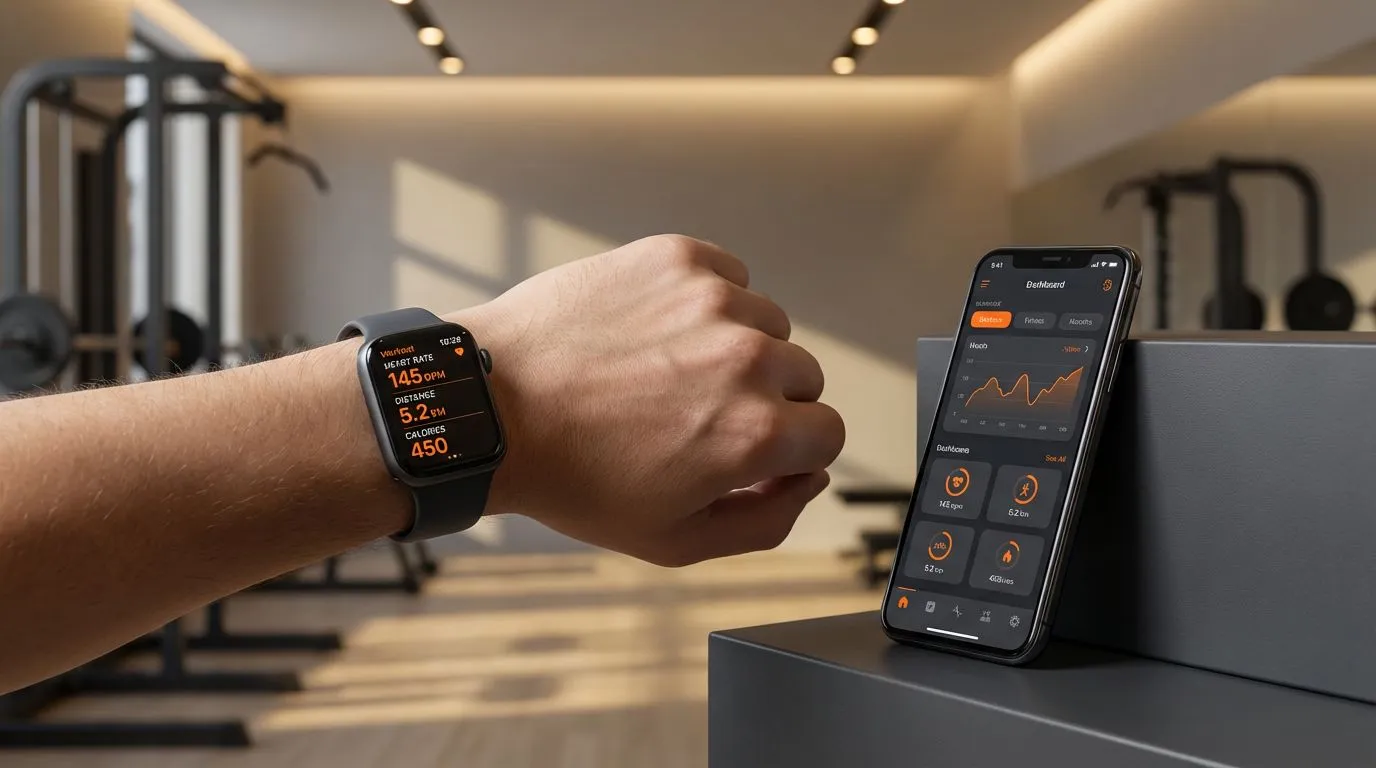
SensAI represents this new generation of fitness technology. By integrating data from your Apple Watch, Garmin, or Oura ring, the platform builds workout plans that adapt to your actual recovery state and performance patterns. This guide breaks down what separates the best fitness apps from the rest and where the technology is heading next.
Key Features of Top Fitness Apps
The apps gaining traction in 2026 share three core capabilities that address the most common reasons people abandon their fitness routines.
Custom Workouts
Personalization goes beyond selecting “beginner” or “advanced” at signup. The best apps analyze your workout history, available equipment, and recovery data to generate sessions that match your current capacity. If you trained legs yesterday and slept poorly last night, the app adjusts. If you only have dumbbells at home, it builds around that constraint.
Progress Tracking
Visual feedback keeps you engaged when motivation dips. Strength graphs show your deadlift climbing over months. Running pace charts reveal improvements invisible to daily perception. The psychological effect of watching progress unfold in real time keeps people returning to their workouts when they might otherwise quit.
Community Support
Social features turn solo training into shared experience. Strava segments create friendly competition on local running routes. Workout sharing holds you accountable to friends who can see when you skip sessions. Community challenges provide external motivation when internal drive runs low.
| Feature | Why It Matters | Best Implementation |
|---|---|---|
| Custom workouts | Prevents generic programs that ignore individual needs | AI-driven adaptation based on recovery and performance data |
| Progress tracking | Provides motivation through visible improvement | Visual graphs showing strength gains and workout consistency |
| Community support | Adds accountability and social motivation | Challenges, progress sharing, and segment competitions |
Benefits of AI in Fitness Personalization
Traditional fitness apps deliver the same workout to everyone who selects similar goals. AI-powered apps observe how your body responds and adjust accordingly.
The difference shows up in the details. An AI system notices that your performance drops when you sleep less than seven hours. It recognizes that your squat strength improves faster than your bench press. It identifies patterns across weeks that would take a human coach months to spot.
More than 70% of wearable users already apply their device data to inform exercise or recovery strategies. AI takes this further by automating the analysis. Instead of manually interpreting your heart rate variability score each morning, the app translates that data into today’s training intensity.
The complete guide to AI personal training explains how these systems learn from your history to predict what will work for your future sessions. The technology acts as a coach that never forgets your training log and never applies a one-size-fits-all template.
Key AI capabilities transforming fitness apps:
- Pattern recognition across recovery metrics and training data
- Real-time adaptation of workout intensity based on readiness
- Progressive overload automatically adjusted to your response rate
- Plateau prevention through strategic variation in stimulus
Integrating Wearables with Fitness Apps
Wearable technology dominates as the number one fitness trend for 2026, with nearly half of U.S. adults now owning a fitness tracker or smartwatch. The hardware collects data. The question is whether your fitness app actually uses it.
Device Compatibility
The best apps connect with multiple device ecosystems. Apple Health, Google Fit, and manufacturer-specific APIs like Garmin Connect and Oura all provide different data streams. Apps that pull from multiple sources build the most complete picture of your health status.
Data Synchronization
Effective sync goes beyond recording your step count. Understanding how HRV functions as a recovery signal transforms raw numbers into training decisions. When your heart rate variability trends downward across several days, that signal indicates accumulated fatigue that should influence workout intensity.
Sleep stages, resting heart rate, training load, and activity patterns all contribute to a comprehensive readiness picture. Apps that sync this data and interpret it correctly can recommend rest days before burnout arrives and push days when your body is primed for a breakthrough.
Your wearable data becomes fitness insight when the app knows how to translate metrics into action. A single low HRV reading means little. A week of declining values demands attention.
Meeting User Goals with Fitness Apps
Fitness goals vary widely. Weight loss requires a different approach than muscle building. Marathon training differs from general health maintenance. The apps earning user loyalty in 2026 recognize these distinctions and build programs accordingly.
Goal alignment matters because:
- Weight loss programs emphasize caloric deficit and metabolic conditioning
- Strength programs prioritize progressive overload and adequate recovery
- Endurance training requires periodization and aerobic base building
- General fitness balances multiple modalities without overspecialization
Apps that ask detailed questions at onboarding and revisit those goals periodically outperform those that set a path and never adjust. Life changes. Injuries happen. Priorities shift. The app should adapt with you.
Features that support goal achievement include scheduled check-ins, progress photos, strength benchmarks, and customizable targets. The path to staying motivated and maintaining workout consistency runs through alignment between your training and your changing life circumstances.
Cost Models and Value for Money
Fitness app pricing spans from completely free to premium subscriptions exceeding $200 annually. The value proposition depends on what you actually use.
| Pricing Model | Examples | Best For |
|---|---|---|
| Free with ads | Basic tracking apps | Casual users wanting simple logging |
| Freemium | Strava, Hevy | Users who want core features free with optional upgrades |
| Monthly subscription | Most AI-powered apps | Committed users wanting full feature access |
| Annual subscription | Premium tiers | Long-term users saving on monthly costs |
| One-time purchase | Some specialized apps | Users who dislike recurring charges |
Free apps cover basic tracking needs for most casual exercisers. The premium tiers typically unlock AI-powered personalization, detailed analytics, and coach-level programming that would cost hundreds monthly from a human trainer.
The value calculation changes based on usage frequency. Someone training five days weekly extracts more value from a $15 monthly subscription than someone exercising twice monthly. Consider your actual training volume before committing to premium pricing.
Ensuring Privacy and Data Security
Fitness apps collect sensitive health information. Sleep patterns, heart rate data, body measurements, and workout history paint an intimate picture of your physical state. That data deserves protection.
Key security measures to look for:
- End-to-end encryption for data transmission
- Local storage options for sensitive information
- Granular sharing controls letting you choose what to share
- Clear data deletion policies when you leave the platform
- Transparent privacy policies in plain language
The fitness app market lacks universal security standards. Users value apps that offer control over their data sharing without burying those controls in complex settings menus.
Trust matters for long-term engagement. Apps that suffer data breaches or sell user information to third parties lose users permanently. The best apps treat your health data as confidential and give you control over who sees it.
A Look at Future Fitness Trends
The fitness app landscape continues evolving. Several emerging trends suggest where the technology heads next.
Virtual reality workouts transform home training into immersive experiences. VR headsets create gym environments, outdoor running paths, and gamified challenges that make exercise feel less like work.
Holistic wellness integration expands beyond exercise into sleep quality and stress management. Apps increasingly treat fitness as one component of overall wellbeing rather than an isolated activity.
Gamification adds achievement systems and leaderboards that tap into the psychological drivers keeping people engaged with video games. Streak tracking creates extrinsic motivation supplementing intrinsic desire to improve.
AI coaching continues advancing beyond static workout plans. Future apps will adjust programming based on real-time recovery signals, performance trends, and individual response patterns, acting as adaptive co-pilots alongside human trainers2.
The through-line connecting these trends is personalization. Generic approaches fail. Technology that understands your individual needs and adapts to your changing circumstances will define the next generation of fitness apps.
FAQs about Fitness Apps
Which fitness app features matter most for beginners?
Custom workout generation and clear exercise instructions top the list. Beginners need guidance on form and progression more than advanced analytics. Look for apps with video demonstrations and structured programs rather than empty logging tools.
How do fitness apps use AI differently than traditional apps?
Traditional apps assign the same workout to everyone with similar goals. AI apps observe your individual response patterns and adjust programming based on recovery status and performance trends. The difference shows up in how the workout changes from session to session.
Are free fitness apps worth using?
Free apps cover basic tracking needs effectively. Premium features like AI personalization, detailed analytics, and structured programs require paid tiers. Assess whether you will use advanced features before subscribing.
How important is wearable integration for fitness apps?
Wearable integration allows apps to see your recovery status, not just your workout performance. Without that data, the app cannot adjust intensity based on sleep quality or accumulated fatigue. Integration becomes more valuable as your training becomes more serious.
What privacy concerns should I have with fitness apps?
Fitness apps collect health data that reveals personal patterns. Check privacy policies for data sharing practices, look for encryption features, and verify you can delete your data if you leave the platform. Avoid apps that sell user information to advertisers.
How often should fitness apps update my workout program?
Effective apps adjust daily based on recovery data and weekly based on performance trends. Static programs that never change miss opportunities to optimize training and risk causing plateaus or overtraining.
Footnotes
-
American College of Sports Medicine. “The Future of Fitness: ACSM Announces Top Trends for 2026.” ACSM, October 22, 2025. https://acsm.org/top-fitness-trends-2026/ ↩
-
Gold’s Gym. “Fitness Trends 2026: What’s Next in Wellness, Tech & Training.” Gold’s Gym Blog, January 13, 2026. https://www.goldsgym.com/blog/2026-fitness-trends/ ↩