Achieve Your 2026 Fitness Goals: Expert Tips and Tricks
Learn how AI-powered fitness coaching transforms goal setting with personalized training, adaptive programs, and data-driven insights for lasting results.

SensAI Team
12 min read
Get a training plan that adapts to your recovery — free on iOS

You download yet another fitness app promising results. You track your workouts for three weeks, maybe four. Then life gets busy, the routine breaks, and six months later you’re back where you started. If this sounds familiar, you’re not alone, but 2026 brings something different. AI-powered fitness coaching is transforming how people set goals, stay consistent, and actually achieve lasting results.
The difference isn’t just another tracking feature or motivational push notification. It’s personalized intelligence that adapts to your schedule, learns from your progress, and adjusts when life throws curveballs. Research shows AI-enabled training leads to 71% better workout adherence and 40% higher fitness goal achievement compared to traditional approaches1. That’s not hype. It’s data from thousands of users who’ve turned short-term motivation into long-term habits.
Understanding Fitness Goals for 2026
Setting fitness goals in 2026 requires a different approach than it did five years ago. The old model (pick a target weight, follow a generic 12-week program, hope for the best) ignores what we now know about individual variation. Two people with identical body types and fitness levels can respond completely differently to the same workout program.
Modern fitness goals need to account for your unique physiology, schedule constraints, recovery patterns, and even your sleep quality from the night before. AI fitness platforms analyze these variables continuously, creating a personalized baseline that evolves as you do. This matters because generic programs fail when they hit your specific roadblocks, whether that’s chronic knee pain, unpredictable work travel, or recovery times that don’t match the program’s assumptions.
Key Differences from Traditional Goal Setting:
AI-powered approaches transform fitness planning in six fundamental ways:
| Aspect | Traditional Approach | AI-Powered Approach |
|---|---|---|
| Goal specificity | Generic targets like “lose 20 pounds” | Data-driven objectives: “reduce body fat by 5-10% while maintaining lean muscle mass” |
| Progress tracking | Weekly weigh-ins only | Multi-metric synthesis (body composition, strength gains, cardio capacity, energy levels) |
| Timeline flexibility | Rigid 12-week programs | Adaptive schedules that respond to your actual progress rate |
| Individual constraints | Ignored or dismissed with “work around it” advice | Factored in from day one |
| Adjustment triggers | Quarterly manual reviews | Real-time changes based on performance data |
| Context awareness | One-size-fits-all | Recognizes capacity varies based on sleep, stress, and life demands |
The fitness industry has shifted toward holistic wellness rather than isolated metrics. Instead of just tracking weight or steps, comprehensive platforms now monitor sleep patterns, stress levels, nutrition quality, and recovery status. This wider lens helps identify what’s actually holding you back. Poor sleep might be sabotaging your strength gains more than your workout routine. High stress could be why you plateau despite perfect adherence.
Your current fitness level also determines what “achievable” looks like for you specifically. Someone who’s been sedentary for years faces different constraints than an athlete returning from injury. AI platforms assess where you’re starting from and calibrate expectations accordingly. This prevents the discouragement cycle where unrealistic targets lead to perceived failure, which kills motivation, which guarantees actual failure.
Setting SMART Fitness Goals Based on AI Insights
SMART goals provide structure through five key elements: being Specific and Measurable, ensuring they’re Achievable and Relevant, plus making them Time-bound. AI adds precision to this framework. Instead of “lose 20 pounds,” AI helps you set “reduce body fat by 5-10% over six months through personalized nutrition and adaptive training.” The difference is specificity backed by what’s actually achievable for your body and lifestyle.
Quick Reference: SMART Goals Enhanced by AI
| Element | What AI Delivers |
|---|---|
| Specific | Transforms “get stronger” → “increase compound lift capacity by 15% over 12 weeks” |
| Measurable | Multi-metric tracking (body composition, strength gains, cardio capacity, energy levels) |
| Achievable | Calibrates targets to YOUR baseline data, not population averages |
| Relevant | Identifies when stated goals conflict with behavior patterns |
| Time-bound | Quarterly milestones that adjust when progress differs from prediction |
Specific - Rather than vague aspirations like “get stronger” or “feel better,” the platform helps you define concrete targets that align with your deeper motivations. If your real goal is hiking with your kids without getting winded, that becomes “increase cardiovascular capacity to sustain moderate activity for 45+ minutes” with specific benchmarks tied to that outcome.
Measurable - Rather than just tracking weight on a scale, which fluctuates daily due to water retention, meal timing, and dozens of other factors, AI synthesizes multiple data points2. Body composition changes, strength progression, cardiovascular improvements, and even subjective energy levels create a fuller picture of progress.
Achievable - If you’re currently sedentary, suggesting five intense workouts per week sets you up for burnout. AI analyzes your baseline fitness level, exercise history, available time, and equipment access to propose realistic targets. It might recommend three 30-minute sessions weekly, progressively increasing intensity as your capacity builds. The platform also factors in constraints like old injuries or chronic conditions, adjusting targets when you report unusual fatigue or skip a workout.
Relevant - If you’re training to run a marathon but hate running, AI might surface that disconnect and suggest alternative endurance goals you’d actually enjoy. The platform can identify when your stated goal doesn’t match your behavior patterns, prompting a conversation about what you really want to achieve.
Personalizing Your Workout Plan with AI
Generic workout programs treat you like an average of thousands of people. AI-powered training treats you like a dataset of one. The platform learns your movement patterns, identifies muscle imbalances, tracks which exercises produce the best results for you specifically, and adapts your program in real time.
This personalization starts with comprehensive assessment. Using your wearable data, movement patterns, strength baselines, and injury history, AI creates a profile that influences every workout recommendation. If your right shoulder has limited range of motion, the system doesn’t just skip overhead presses, it suggests mobility work and alternative exercises that build the same muscle groups safely.
AI Personalization Features Rated by Impact:
| Feature | Why It Matters | Rating |
|---|---|---|
| Real-time form analysis via camera | Prevents injury, improves effectiveness immediately | ★★★★★ |
| Adaptive difficulty based on performance | Prevents under/overtraining automatically | ★★★★★ |
| Wearable integration for readiness | Adjusts intensity based on recovery metrics | ★★★★☆ |
| Exercise substitution for constraints | Handles injuries, travel logistics, equipment limits | ★★★★☆ |
| Progress prediction and plateau detection | Forecasts when to increase/deload | ★★★★☆ |
| Two-way feedback communication | Improves over time but requires user input | ★★★☆☆ |
The depth of this initial assessment matters. Traditional trainers might spend one session learning your background. AI platforms continuously refine their understanding. Every workout provides new data points. How quickly do you fatigue during cardio intervals? Which muscle groups recover faster? Do you perform better in morning or evening sessions? The answers shape tomorrow’s programming.
The feedback loop works both ways. You can tell the AI when something feels off. A particular exercise aggravates your lower back, or a recommended pace feels unsustainable. The platform adjusts immediately rather than waiting for your next quarterly review with a human trainer. This real-time communication prevents minor issues from becoming major problems.
Adaptive programming is where AI truly shines. If you crush Monday’s workout and report feeling great, Tuesday’s session might increase intensity. If you sleep poorly and your resting heart rate is elevated, the platform might suggest active recovery instead of high-intensity intervals. This responsiveness prevents both undertraining (leaving gains on the table) and overtraining (which leads to burnout or injury).
Tracking and Measuring Your Progress Effectively
Progress tracking in 2026 goes far beyond counting reps or logging miles. Comprehensive measurement requires capturing physiological markers, performance metrics, subjective well-being, and behavioral consistency, then interpreting what it all means.
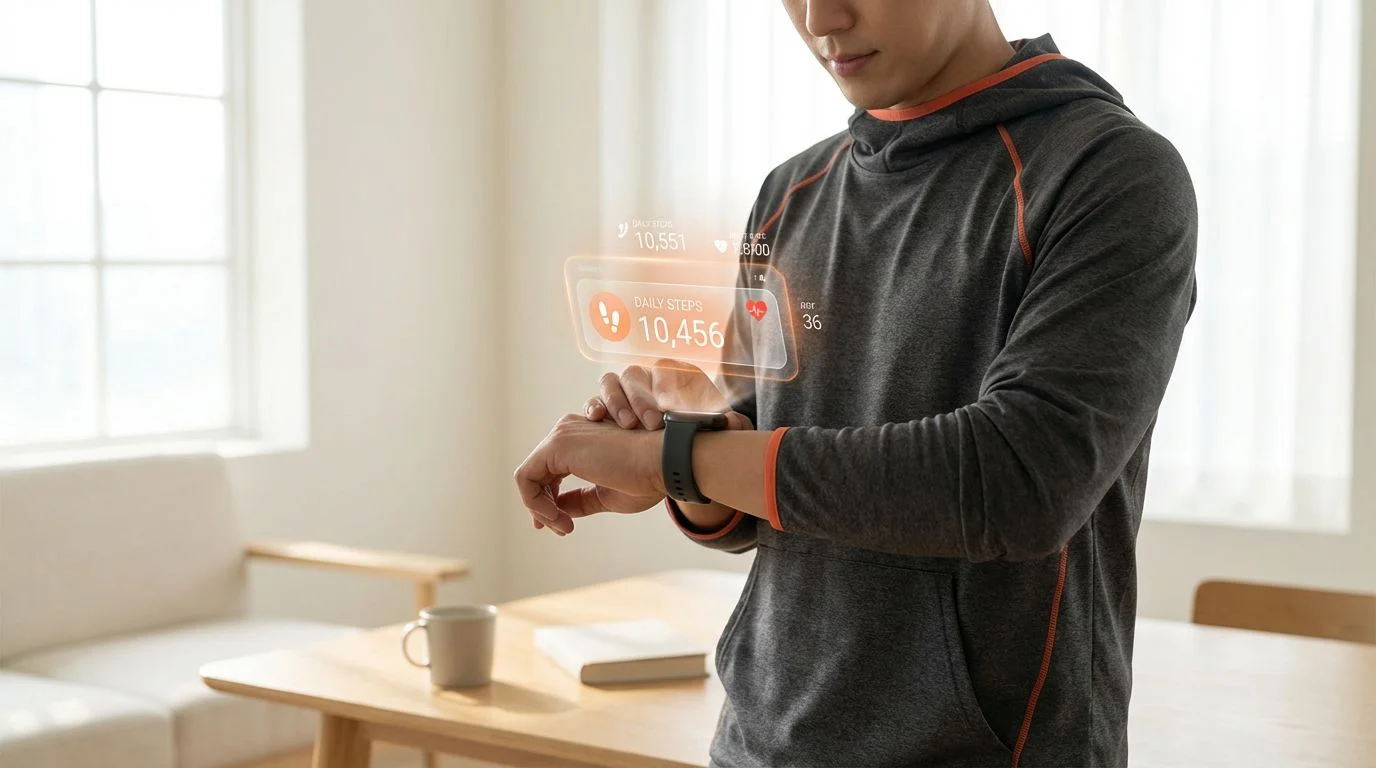
Smart wearables provide continuous data streams rather than isolated snapshots. Instead of weighing yourself once weekly and hoping the number moved in the right direction, you get daily insights into body composition trends, sleep quality, recovery status, and cardiovascular health. This reduces the emotional roller coaster of scale fluctuations while highlighting genuine progress.
Essential Tracking Metrics by Goal Type:
Your tracking metrics should align with your specific objective:
- Strength-focused goals: Working weights per exercise, rep maxes (1RM/3RM/5RM), total volume per session
- Endurance training: Pace at steady heart rate zones, time-to-completion benchmarks, distance progression
- Body composition: Waist and hip measurements, weekly progress photos, scale weight trends (weekly averages, not daily fluctuations)
- Athletic performance: Sprint times, vertical jump height, agility drill scores, power output metrics
- General fitness: Resting heart rate trends, workout completion rates, perceived exertion patterns across sessions
Why Continuous Monitoring Changes Everything:
The shift from spot checks to continuous monitoring changes what you can measure. Traditional approaches capture data during your workout or weigh-in, missing the other 23 hours of your day. Wearables track your resting heart rate overnight, your stress levels during work meetings, your movement patterns on rest days, and your sleep architecture every night. This complete picture reveals connections between lifestyle factors and fitness outcomes that spot checks can’t capture.
Pattern Recognition and Predictive Insights:
AI platforms excel at pattern recognition humans miss. You might not notice that your running pace improves consistently on days when you sleep seven-plus hours, or that leg workouts suffer when you haven’t taken a rest day in five sessions. The AI spots these correlations and adjusts your plan accordingly.
Performance tracking becomes predictive rather than reactive. By analyzing trends in your strength progression, the AI can forecast when you’re ready to increase weight, when you’re approaching a plateau, or when you need a deload week. This prevents the common mistakes of adding weight too quickly (risking injury) or too slowly (limiting progress).
The Power of Consistency:
Progress visualization matters for sustained motivation. AI platforms can show you trends over weeks and months rather than day-to-day noise. You see that your average running pace has dropped by 45 seconds per mile over three months, even though individual runs vary wildly. You notice strength gains across multiple exercises pointing to real muscle development, not just one lucky workout.
The most valuable metric is often the simplest: consistency. Research tracking over 500,000 fitness app users found that sustained engagement matters more than workout intensity3. Users who maintained consistent activity, even modest increases like an extra 464 daily steps, showed better long-term outcomes than those who had intense bursts followed by dropout. AI coaching helps by making consistency easier through personalized scheduling, realistic expectations, and adaptive difficulty.
Optimizing Nutrition and Recovery with AI
Nutrition is where many fitness plans break down. You can execute perfect workouts but undermine progress with poor fueling. AI-powered nutrition guidance analyzes your goals, activity levels, dietary preferences, and metabolic responses to create meal plans that actually fit your life.
What AI Nutrition Tracking Considers:
- Nutrient timing: What to eat before and after workouts for optimal performance and recovery
- Macronutrient ratios: Protein, carbs, and fats aligned with your training style and goals
- Personal responses: How specific foods affect your energy levels and recovery patterns
- Real-world constraints: Desk lunches, meal prep aversion, allergies, food preferences
If you consistently log low energy on days when breakfast is high-carb, the AI might suggest shifting toward protein-rich morning meals. Traditional nutrition plans either ignore these factors or tell you to change them. AI platforms work within your actual life, finding nutritious options that fit your preferences and schedule.
Critical Nutrition Warning
Never follow extreme calorie restriction (below 1200 calories daily for women, 1500 for men) without medical supervision, even if an AI platform suggests it. Severe deficits crash metabolism, increase injury risk by 40%, and trigger hormonal disruptions that sabotage long-term results. Sustainable fat loss requires modest deficits (300-500 calories) that preserve muscle and energy levels.
The approach focuses on behavior change rather than perfection. If you consistently skip breakfast, the AI doesn’t scold you, it adjusts calorie distribution to your other meals and suggests easy grab-and-go options for busy mornings. If you tend to overeat on weekends, it might recommend slightly lower intake during the week to balance weekly averages.
Behavioral insights make AI nutrition coaching stick. Research on over 65,000 users found that those using AI-enhanced coaching logged meals more consistently, set more specific goals, and achieved 74% better weight loss results than those using basic tracking alone4. The difference came from intelligent nudges like reminders at optimal times, feedback on meal quality, and encouragement when patterns slipped.
Recovery Optimization:
Recovery optimization is nutrition’s overlooked partner. AI platforms use your workout intensity, sleep quality, and recovery metrics to recommend specific recovery protocols. After a hard training session, you might get guidance on protein timing for muscle repair, hydration targets, or even supplement suggestions based on your deficits.
Active recovery gets personalized too. Instead of generic “take a rest day” advice, AI might suggest specific recovery activities based on your training load and soreness patterns:
- Yoga for tight hips after heavy squats
- Light swimming for cardiovascular maintenance during a strength-focused phase
- Foam rolling protocols targeting your specific problem areas
This turns recovery from passive downtime into active optimization.
Sleep Monitoring:
Sleep monitoring ties it all together. AI-powered sleep analysis through wearables identifies patterns affecting your recovery and performance. Poor sleep tanks workout quality, slows muscle recovery, increases injury risk, and undermines nutrition adherence through hormonal changes that drive cravings. When the AI detects sleep issues, it can adjust training intensity, modify nutrition to support better sleep, or flag the need for additional recovery days.
Overcoming Common Fitness Challenges with Technology
The biggest fitness challenge isn’t knowing what to do, it’s actually doing it consistently when life gets complicated. AI fitness technology addresses this through adaptive intelligence that works around your real constraints rather than ignoring them.
| Common Challenge | Traditional Response | AI-Powered Solution | Result |
|---|---|---|---|
| Lack of time | “Make time” or skip workouts | Optimizes 20-min high-impact sessions targeting priority areas | Same results in less time |
| Motivation crashes | Generic pep talks, ignore issue | Gamification, progress visualization, adjusted expectations | Sustains engagement |
| Old injuries flare up | Follow program anyway or quit | Instant exercise swaps, rehab movements suggested | Prevents setbacks |
| Inconsistent schedule | Fixed routine breaks down | Adapts to hotel gyms, bodyweight alternatives, recovery sessions | Sustains progress through chaos |
| Progress plateaus | Keep doing same thing or give up | Analyzes bottlenecks, implements solution automatically | Breaks through stalls |
| Generic programs fail | Try different generic program | Accommodates YOUR constraints from day one | Personalized success |
Time Optimization:
Lack of time is the most common excuse. AI solves this by optimizing workout efficiency rather than demanding more hours. If you only have 20 minutes, the platform designs a high-impact session targeting your priority areas. The efficiency gains come from eliminating wasted effort: exercises you don’t need, sets that don’t move you toward your goals, and rest periods that don’t match your recovery capacity. Twenty focused minutes beats an hour of unfocused work.
Motivation and Psychology:
Motivation crashes after the initial excitement fades. AI maintains engagement through:
- Gamification: Achievement tracking and milestone celebrations
- Strategic challenge-setting: Adjusted expectations when you plateau
- Effort recognition: Rewards for consistency, not just perfect performance
The psychological component matters as much as the physical programming. Understanding why you’re doing each exercise increases buy-in compared to blindly following generic instructions.
Adapting to Real Life:
Generic programs fail when they clash with your body’s realities. Old injuries, mobility limitations, or even temporary setbacks like a twisted ankle would derail a fixed program. AI-powered training adapts instantly. Injured your shoulder? The next workout automatically swaps upper body exercises for core and lower body focus while suggesting rehab movements.
Inconsistent schedules sabotage traditional programs built on predictable weekly routines. Traveling for work? The platform adjusts to hotel gym equipment or bodyweight alternatives. Unexpected overtime? Tomorrow’s workout shifts to a recovery session. This flexibility prevents the all-or-nothing thinking that kills long-term adherence.
Next Steps for a Future-Ready Fitness Journey with SensAI
Your fitness journey in 2026 doesn’t require choosing between technology and human expertise. It means using AI to amplify what works for you specifically. SensAI brings this vision to life through an AI-powered personal trainer that runs on your iPhone (Android coming soon) and integrates seamlessly with your existing wearables.
Supported Wearables:
- Apple Watch
- Garmin devices
- Oura Ring
- Fitbit
The platform combines your personal health data with AI intelligence that creates truly individualized workout plans. No two users get the same program because no two users have identical goals, constraints, schedules, or body types. Real-time coaching adjusts every session based on your current readiness, recent performance, sleep quality, and recovery status.
What Sets SensAI Apart:
The depth of personalization without the cost of a human personal trainer. You get 24/7 access to coaching that evolves with you. The platform learns your preferences, anticipates your obstacles, and adjusts before small issues become major setbacks. The beta program gives you early access to technology that will reshape fitness over the next decade.
Getting Started:
- Download the SensAI app
- Connect your wearable devices
- Complete an initial fitness assessment
- Define your goals
The AI builds your first workout plan immediately, adapting from day one based on your feedback and performance. The technology handles the complexity. You just show up and follow the guidance.
Your wearables are already collecting the data. Your goals are already clear in your mind. The only missing piece is intelligent coaching that turns that data and those goals into sustainable progress. SensAI provides that missing piece.
FAQs About Fitness Goals
How Can AI Enhance Fitness Goals?
AI enhances fitness goals by providing personalized analysis of your unique physiology, daily schedule, recovery patterns, and progress data to create adaptive training plans that evolve with you. Instead of following generic programs, you get workouts tailored to your current readiness level, adjusted in real time based on factors like sleep quality and previous performance.
What Are SMART Fitness Goals?
SMART fitness goals follow a proven framework with five elements: being Specific and Measurable, ensuring they’re Achievable and Relevant, plus making them Time-bound. This structure provides clear accountability. For example, rather than “get healthier,” a SMART goal would be “reduce body fat by 7% over six months through three weekly strength sessions and personalized nutrition tracking.” AI platforms enhance SMART goal-setting by analyzing your baseline data to propose realistic targets, breaking annual goals into quarterly milestones, and adjusting timelines based on actual progress patterns rather than generic assumptions.
Are AI-Enhanced Workout Plans Cost-Effective?
AI-enhanced workout plans offer significant cost advantages over traditional personal training while delivering comparable results. Where a human trainer might cost $50-150 per hour-long session (typically 2-3 times weekly), AI platforms provide 24/7 coaching and adaptive programming at a fraction of the cost. The value extends beyond price. AI coaches don’t sleep, never cancel appointments, and continuously analyze your wearable data to optimize every aspect of your training and recovery. For users seeking personalized guidance without the premium price tag of human coaching, AI represents exceptional value.
How Do Wearables Help Track Fitness Progress?
Wearables track fitness progress by continuously monitoring key health metrics including heart rate, sleep quality, activity levels, heart rate variability, and recovery status. This constant data stream provides insights impossible to capture through periodic gym visits or manual logging5. AI platforms synthesize this wearable data to reveal patterns you’d otherwise miss, like how sleep quality predicts workout performance, or which recovery protocols optimize your specific physiology.
References
Footnotes
-
Adam Rhodes. “13 Must-Know AI Personal Training Statistics: What Trainers Need in 2025.” create.fit, June 12, 2025. https://create.fit/blogs/ai-personal-training-statistics/ ↩
-
NETA. “AI in Fitness: How AI is Transforming the Industry.” netafit.org, June 13, 2025. https://www.netafit.org/2025/06/ai-in-fitness-how-ai-is-transforming-the-industry/ ↩
-
Tarun Sai Lomte. “Do fitness apps change behavior in the long run?” news-medical.net, September 25, 2025. https://www.news-medical.net/news/20250925/Do-fitness-apps-change-behavior-in-the-long-run.aspx ↩
-
Lele Sang. “Human-AI coaching models boost weight loss.” news.umich.edu, October 2, 2025. https://news.umich.edu/human-ai-coaching-models-boost-weight-loss/ ↩
-
Global Wellness Institute. “AI Initiative Trends for 2025.” globalwellnessinstitute.org, April 2, 2025. https://globalwellnessinstitute.org/global-wellness-institute-blog/2025/04/02/ai-initiative-trends-for-2025/ ↩